MCERP Community Recovery GuideMCERP ရပ်ရွာပြန်လည်ကောင်းမွန်ရေး လမ်းညွှန် For injured people, families, friends and communitiesဒဏ်ရာရသူများ၊ မိသားစု၊ မိတ်ဆွေများနှင့် ရပ်ရွာအတွက်
Free · Non-commercial · Community-focusedအခမဲ့ · စီးပွားရေးမဟုတ် · ရပ်ရွာကိုဗဟိုပြု

Everyday recovery after a war-related injuryစစ်ဘေးဒဏ်ရာပြီးနောက် နေ့စဉ်ဘဝ ပြန်လည်ကောင်းမွန်ရေး

A practical guide for injured people and the family members, friends, neighbours and community volunteers supporting them. It uses occupational therapy principles to make daily activities safer, easier and more meaningful when professional services or equipment are limited.ဒဏ်ရာရသူများနှင့် ၎င်းတို့ကို ကူညီသည့် မိသားစုဝင်များ၊ မိတ်ဆွေများ၊ အိမ်နီးချင်းများနှင့် ရပ်ရွာစေတနာ့ဝန်ထမ်းများအတွက် လက်တွေ့လမ်းညွှန်ဖြစ်သည်။ ပညာရှင်ဝန်ဆောင်မှု သို့မဟုတ် ကိရိယာများ နည်းပါးသည့်အခါ နေ့စဉ်လုပ်ငန်းများကို ပိုမိုဘေးကင်း၊ လွယ်ကူပြီး အဓိပ္ပာယ်ရှိစေရန် လုပ်ငန်းကုထုံးအခြေခံမူများကို အသုံးပြုထားသည်။

Use this guide for everyday support—not diagnosis or treatment. Community helpers can listen, encourage, make the environment safer and help with familiar activities. Do not change medicines, dressings, catheters, splints, prostheses or exercise plans unless a trained health worker has shown you exactly what to do.ဤလမ်းညွှန်ကို နေ့စဉ်ကူညီမှုအတွက်သာ အသုံးပြုပါ—ရောဂါရှာဖွေခြင်း သို့မဟုတ် ကုသခြင်းအတွက် မဟုတ်ပါ။ ရပ်ရွာကူညီသူများက နားထောင်ခြင်း၊ အားပေးခြင်း၊ ပတ်ဝန်းကျင်ကို ဘေးကင်းစေခြင်းနှင့် ရင်းနှီးသောလုပ်ငန်းများတွင် ကူညီနိုင်သည်။ လေ့ကျင့်ထားသော ကျန်းမာရေးလုပ်သားက တိတိကျကျ မသင်ပေးထားပါက ဆေးဝါး၊ ဒဏ်ရာအုပ်ပတ်၊ ဆီးပိုက်၊ ပြားထောက်၊ ခြေတုလက်တု သို့မဟုတ် လေ့ကျင့်ခန်းအစီအစဉ်ကို မပြောင်းပါနှင့်။

Using OT principles in everyday lifeနေ့စဉ်ဘဝတွင် လုပ်ငန်းကုထုံးအခြေခံမူများ အသုံးပြုခြင်း

Help the person do what matters to themလူအတွက် အရေးကြီးသောအရာကို လုပ်နိုင်အောင် ကူညီပါ

Occupational therapy (OT) focuses on everyday activities: washing, dressing, eating, caring for family, working, farming, studying, cooking, worship and community life. Families and communities can use the same basic idea by looking at three things together: what the person can do today, how the activity could be made easier, and what could change in the surroundings.လုပ်ငန်းကုထုံး (OT) သည် ရေချိုးခြင်း၊ အဝတ်ဝတ်ခြင်း၊ စားသောက်ခြင်း၊ မိသားစုပြုစုခြင်း၊ အလုပ်၊ လယ်ယာ၊ ပညာရေး၊ ချက်ပြုတ်ခြင်း၊ ဘာသာရေးနှင့် ရပ်ရွာဘဝကဲ့သို့ နေ့စဉ်လုပ်ငန်းများကို အဓိကထားသည်။ မိသားစုနှင့် ရပ်ရွာများသည် လူက ယနေ့ဘာလုပ်နိုင်သလဲ၊ လုပ်ငန်းကို မည်သို့လွယ်စေနိုင်သလဲ၊ ပတ်ဝန်းကျင်တွင် ဘာပြောင်းနိုင်သလဲ ဟူသော အချက်သုံးခုကို အတူကြည့်ခြင်းဖြင့် ထိုအခြေခံအယူအဆကို အသုံးပြုနိုင်သည်။

The goal is not to “do therapy” to someone. Ask permission, agree on one meaningful goal, let the person do every safe part they can, offer only the help they want, and stop if pain, fatigue, fear or other symptoms are getting worse.ရည်ရွယ်ချက်မှာ လူတစ်ဦးကို “ကုထုံးလုပ်ပေးခြင်း” မဟုတ်ပါ။ ခွင့်ပြုချက်တောင်းပါ၊ အဓိပ္ပာယ်ရှိသော ရည်မှန်းချက်တစ်ခုကို အတူသဘောတူပါ၊ ဘေးကင်းသမျှအပိုင်းကို ကိုယ်တိုင်လုပ်ခွင့်ပေးပါ၊ လိုချင်သောအကူအညီသာ ပေးပါ၊ နာကျင်မှု၊ ပင်ပန်းမှု၊ ကြောက်ရွံ့မှု သို့မဟုတ် အခြားလက္ခဏာများ ပိုဆိုးလာပါက ရပ်ပါ။

Community support can includeရပ်ရွာကူညီမှုတွင် ပါဝင်နိုင်သည်များ
  • Listening, encouraging and helping the person choose their own goalsနားထောင်ခြင်း၊ အားပေးခြင်းနှင့် ကိုယ်ပိုင်ရည်မှန်းချက် ရွေးချယ်ရန် ကူညီခြင်း
  • Clearing hazards, organising useful items and adapting familiar daily tasksအန္တရာယ်များရှင်းလင်းခြင်း၊ အသုံးဝင်သောပစ္စည်းများ စီစဉ်ခြင်းနှင့် ရင်းနှီးသောနေ့စဉ်လုပ်ငန်းများကို လွယ်ကူအောင်ပြင်ဆင်ခြင်း
  • Following a plan already taught by a trained health or rehabilitation workerလေ့ကျင့်ထားသော ကျန်းမာရေး သို့မဟုတ် ပြန်လည်သန်စွမ်းရေးလုပ်သား သင်ပေးထားသောအစီအစဉ်ကို လိုက်နာခြင်း
Leave to trained health workersလေ့ကျင့်ထားသော ကျန်းမာရေးလုပ်သားထံ ထားရမည်များ
  • Diagnosing injuries or deciding that a wound, fracture or joint is medically safeဒဏ်ရာအမျိုးအစား သတ်မှတ်ခြင်း သို့မဟုတ် ဒဏ်ရာ၊ အရိုးကျိုးမှု၊ အဆစ်ကို ဆေးဘက်ဆိုင်ရာဘေးကင်းသည်ဟု ဆုံးဖြတ်ခြင်း
  • Making or changing splints, prostheses, pressure cushions, catheters, dressings or compression bandagesပြားထောက်၊ ခြေတုလက်တု၊ ဖိအားလျှော့ခုံ၊ ဆီးပိုက်၊ ဒဏ်ရာအုပ်ပတ် သို့မဟုတ် ဖိအားပတ်တီးကို ပြုလုပ်/ပြောင်းလဲခြင်း
  • Prescribing exercises, forcing movement or changing medicines and wound careလေ့ကျင့်ခန်းသတ်မှတ်ခြင်း၊ လှုပ်ရှားမှုအတင်းလုပ်ခြင်း သို့မဟုတ် ဆေးဝါးနှင့် ဒဏ်ရာပြုစုမှုကို ပြောင်းလဲခြင်း
About the MCERP projectMCERP စီမံကိန်းအကြောင်း

A disability-led response shaped by local prioritiesဒေသလိုအပ်ချက်များဖြင့် ပုံဖော်ထားသော မသန်စွမ်းသူများ ဦးဆောင်သည့် တုံ့ပြန်မှု

The Myanmar Coordination Initiative of Equal Rights for Persons with Disabilities (MCERP) was established in December 2021 by people with disabilities responding to the military coup and continuing conflict. It works in disability rights, research, capacity building, rehabilitation, humanitarian assistance and disability-inclusive policy.မြန်မာနိုင်ငံ မသန်စွမ်းသူများ တန်းတူအခွင့်အရေး ညှိနှိုင်းရေးအဖွဲ့ (MCERP) ကို ၂၀၂၁ ခုနှစ် ဒီဇင်ဘာလတွင် စစ်အာဏာသိမ်းမှုနှင့် ဆက်လက်ဖြစ်ပွားနေသော ပဋိပက္ခအပေါ် တုံ့ပြန်သည့် မသန်စွမ်းသူများက တည်ထောင်ခဲ့သည်။ အဖွဲ့သည် မသန်စွမ်းသူအခွင့်အရေး၊ သုတေသန၊ စွမ်းရည်မြှင့်တင်ရေး၊ ပြန်လည်သန်စွမ်းရေး၊ လူသားချင်းစာနာထောက်ထားမှုနှင့် မသန်စွမ်းသူများ ပါဝင်နိုင်သော မူဝါဒများအတွက် လုပ်ဆောင်သည်။

This project is creating a practical, plain-language guide for people living with war-related injuries and the family members, friends, neighbours and community volunteers around them. It translates useful OT principles into everyday support that does not require the reader to be a clinician.ဤစီမံကိန်းသည် စစ်ဘေးဒဏ်ရာဖြင့် နေထိုင်သူများနှင့် ၎င်းတို့အနီးရှိ မိသားစုဝင်များ၊ မိတ်ဆွေများ၊ အိမ်နီးချင်းများ၊ ရပ်ရွာစေတနာ့ဝန်ထမ်းများအတွက် ရိုးရှင်းလက်တွေ့ကျသော လမ်းညွှန်တစ်ခု ဖန်တီးနေသည်။ စာဖတ်သူသည် ဆေးဘက်ပညာရှင်မဟုတ်ဘဲ အသုံးပြုနိုင်ရန် အသုံးဝင်သော OT အခြေခံမူများကို နေ့စဉ်ကူညီမှုအဖြစ် ပြောင်းလဲဖော်ပြထားသည်။

18–35Primary age group described by the projectစီမံကိန်းတွင် အဓိကဖော်ပြထားသော အသက်အုပ်စု
85.2%Reported as needing rehabilitation supportပြန်လည်သန်စွမ်းရေးအကူအညီ လိုအပ်သည်ဟု အစီရင်ခံထားသူများ
3.4%Reported as receiving rehabilitation supportပြန်လည်သန်စွမ်းရေးအကူအညီ ရရှိသည်ဟု အစီရင်ခံထားသူများ

Figures and organisational details above are drawn from MCERP Project 2026, the project brief and the project Expression of Interest. They describe the project context and are not presented as live national statistics.အထက်ပါ ကိန်းဂဏန်းများနှင့် အဖွဲ့အစည်းဆိုင်ရာ အချက်အလက်များကို MCERP Project 2026၊ စီမံကိန်းအကျဉ်းနှင့် စီမံကိန်းစိတ်ဝင်စားမှုတင်ပြချက်မှ ရယူထားသည်။ ၎င်းတို့သည် စီမံကိန်းအခြေအနေကို ဖော်ပြခြင်းဖြစ်ပြီး လက်ရှိနိုင်ငံလုံးဆိုင်ရာ ကိန်းဂဏန်းများအဖြစ် မတင်ပြထားပါ။

How this site is organisedဤဝက်ဘ်ဆိုက်၏ ဖွဲ့စည်းပုံ

Daily activities, three injury guides, rehabilitation through leisure, and useful contactsနေ့စဉ်လုပ်ငန်းများ၊ ဒဏ်ရာလမ်းညွှန်သုံးခု၊ အပန်းဖြေလှုပ်ရှားမှုဖြင့် ပြန်လည်သန်စွမ်းရေးနှင့် အသုံးဝင်သောဆက်သွယ်ရန်များ

Each injury section explains what family and community members may notice, safe ways to help, simple low-cost ideas, what not to attempt, signs of progress, and warning signs that need medical help.ဒဏ်ရာအပိုင်းတိုင်းတွင် မိသားစုနှင့် ရပ်ရွာဝင်များ သတိပြုနိုင်သည့်အရာများ၊ ဘေးကင်းသောကူညီနည်းများ၊ ကုန်ကျစရိတ်နည်းသောအကြံများ၊ မလုပ်သင့်သည့်အရာများ၊ တိုးတက်မှုလက္ခဏာများနှင့် ဆေးဘက်ဆိုင်ရာအကူအညီလိုသည့် အန္တရာယ်လက္ခဏာများကို ရှင်းပြထားသည်။

Activities of daily livingနေ့စဉ်ဘဝလုပ်ငန်းများ

Practical, person-centred guidance for dressing, showering, toileting, transfers and eating.အဝတ်အစားဝတ်ဆင်ခြင်း၊ ရေချိုးခြင်း၊ အိမ်သာသုံးခြင်း၊ နေရာပြောင်းရွှေ့ခြင်းနှင့် စားသောက်ခြင်းအတွက် လူကိုဗဟိုပြုသော လက်တွေ့လမ်းညွှန်။

Brain, spine and nerve injuriesဦးနှောက်၊ ကျောရိုးနှင့် အာရုံကြောဒဏ်ရာများ

Traumatic brain injury, spinal cord injury, and peripheral nerve damage from blasts, gunshots, and crush injuries.ပေါက်ကွဲမှု၊ သေနတ်ဒဏ်ရာနှင့် ဖိညှပ်ဒဏ်ရာများကြောင့် ဖြစ်သော ဦးနှောက်ထိခိုက်ဒဏ်ရာ၊ ကျောရိုးမကြီးအာရုံကြော ထိခိုက်မှုနှင့် အစွန်အဖျားအာရုံကြော ပျက်စီးမှု။

Limb, burn and bone injuriesခြေလက်၊ မီးလောင်နှင့် အရိုးဒဏ်ရာများ

Limb loss and amputation (including landmine injuries), burns, and musculoskeletal trauma.ခြေလက်ဆုံးရှုံးမှုနှင့် ဖြတ်တောက်ခြင်း (မြေမြှုပ်မိုင်းဒဏ်ရာများ အပါအဝင်)၊ မီးလောင်ဒဏ်ရာနှင့် အရိုးအကြွက်သားဆိုင်ရာ ဒဏ်ရာများ။

Hearing & visionအကြားအာရုံနှင့် အမြင်အာရုံ

Blast-related hearing loss and tinnitus, and vision impairment from eye and brain injury.ပေါက်ကွဲမှုကြောင့် အကြားအာရုံဆုံးရှုံးမှုနှင့် နားထဲအသံမြည်ခြင်း၊ မျက်လုံးနှင့် ဦးနှောက်ထိခိုက်မှုကြောင့် အမြင်အာရုံချို့ယွင်းမှု။

Rehabilitation through leisureအပန်းဖြေလှုပ်ရှားမှုဖြင့် ပြန်လည်သန်စွမ်းရေး

Adapted soccer, games, music, chair dancing and cooking ideas that support enjoyment, skills and community participation.ပျော်ရွှင်မှု၊ စွမ်းရည်နှင့် ရပ်ရွာပါဝင်မှုကို အားပေးသည့် ပြင်ဆင်ထားသော ဘောလုံး၊ ဂိမ်း၊ ဂီတ၊ ထိုင်ခုံအကနှင့် ချက်ပြုတ်မှုအကြံများ။

Resourcesအရင်းအမြစ်များ

Trusted organisations, free learning and places to look for rehabilitation, disability and practical support.ယုံကြည်ရသောအဖွဲ့အစည်းများ၊ အခမဲ့သင်ယူမှုနှင့် ပြန်လည်သန်စွမ်းရေး၊ မသန်စွမ်းမှု၊ လက်တွေ့အကူအညီ ရှာဖွေရန်နေရာများ။

Working in conflict-affected communitiesပဋိပက္ခဒဏ်ခံရသော ရပ်ရွာများတွင် လုပ်ဆောင်ခြင်း

Principles that shape everything on this siteဤဝက်ဘ်ဆိုက်တစ်ခုလုံးကို ပုံဖော်ထားသော အခြေခံမူများ

  • Start with the person, not equipment. Ask what activity matters, make one small change at a time and use ordinary household items only when they are stable and cannot injure the person. Medical devices still need trained fitting.ကိရိယာမဟုတ်ဘဲ လူမှ စတင်ပါ။ မည်သည့်လုပ်ငန်းက အရေးကြီးသည်ကို မေး၍ တစ်ကြိမ်လျှင် အပြောင်းအလဲသေးသေးတစ်ခု ပြုလုပ်ပါ။ တည်ငြိမ်ပြီး ထိခိုက်စေနိုင်ခြင်းမရှိမှသာ အိမ်သုံးပစ္စည်းကို အသုံးပြုပါ။ ဆေးဘက်ဆိုင်ရာကိရိယာများကို လေ့ကျင့်ထားသူက အံဝင်အောင် ပြုလုပ်ရမည်။
  • Family and community support participation. Help with the parts the person cannot yet do, but allow time and choice so they can do every safe part themselves.မိသားစုနှင့် ရပ်ရွာသည် ပါဝင်နိုင်မှုကို ထောက်ပံ့သည်။ ယခုမလုပ်နိုင်သေးသောအပိုင်းကို ကူညီပါ၊ သို့သော် ဘေးကင်းသောအပိုင်းတိုင်းကို ကိုယ်တိုင်လုပ်နိုင်ရန် အချိန်နှင့် ရွေးချယ်ခွင့်ပေးပါ။
  • Culture shapes occupation. Floor-level living, squat toilets, eating with the hand, longyi dressing, farming and market work, and religious practice all change what "independence" means and which movements matter most.ယဉ်ကျေးမှုသည် နေ့စဉ်လုပ်ဆောင်မှုများကို ပုံဖော်သည်။ ကြမ်းပြင်ပေါ်နေထိုင်မှု၊ ခွေးခြေထိုင်အိမ်သာ၊ လက်ဖြင့်စားခြင်း၊ လုံချည်ဝတ်ဆင်ခြင်း၊ လယ်ယာနှင့် ဈေးရောင်းဝယ်လုပ်ငန်း၊ ဘာသာရေးဆောင်ရွက်မှုတို့သည် "လွတ်လပ်စွာလုပ်ဆောင်နိုင်မှု" ၏ အဓိပ္ပာယ်နှင့် အရေးအကြီးဆုံး လှုပ်ရှားမှုများကို သတ်မှတ်ပေးသည်။
  • Emotional recovery matters too. War injury can bring grief, fear and stigma. Include the person in conversation, maintain familiar routines and social connection, and seek mental health support if they are unsafe or overwhelmed.စိတ်ပိုင်းဆိုင်ရာ ပြန်လည်ကောင်းမွန်မှုလည်း အရေးကြီးသည်။ စစ်ဘေးဒဏ်ရာကြောင့် ဝမ်းနည်းမှု၊ ကြောက်ရွံ့မှုနှင့် အထင်သေးခံရမှု ဖြစ်နိုင်သည်။ လူကို စကားဝိုင်းတွင် ပါဝင်စေ၍ ရင်းနှီးသောလုပ်ရိုးလုပ်စဉ်နှင့် လူမှုဆက်ဆံရေးကို ထိန်းသိမ်းပါ။ မဘေးကင်းခြင်း သို့မဟုတ် မခံနိုင်လောက်အောင် စိတ်ဖိစီးခြင်းရှိပါက စိတ်ကျန်းမာရေးအကူအညီ ရှာပါ။
  • Safety first. Stop when symptoms worsen. Community support never replaces medical care, and no activity on this site should override advice already given by a trained health worker.ဘေးကင်းရေး အရင်ဆုံး။ လက္ခဏာများ ပိုဆိုးလာပါက ရပ်ပါ။ ရပ်ရွာကူညီမှုသည် ဆေးဘက်ဆိုင်ရာစောင့်ရှောက်မှုကို အစားမထိုးနိုင်ဘဲ ဤဆိုက်ရှိ လုပ်ဆောင်မှုမည်သည့်အရာကမျှ လေ့ကျင့်ထားသော ကျန်းမာရေးလုပ်သား၏ အကြံကို မကျော်လွန်ရပါ။
YouTube language accessYouTube ဘာသာစကား အသုံးပြုနိုင်မှု

How to turn on Burmese subtitlesမြန်မာစာတန်းထိုး ဖွင့်နည်း

YouTube controls can look slightly different on a phone, computer or television. These steps work when captions and automatic translation are available for that video.YouTube ထိန်းချုပ်ခလုတ်များသည် ဖုန်း၊ ကွန်ပျူတာ သို့မဟုတ် တီဗီပေါ်တွင် အနည်းငယ်ကွာနိုင်သည်။ ဗီဒီယိုတွင် စာတန်းထိုးနှင့် အလိုအလျောက်ဘာသာပြန် ရနိုင်သောအခါ ဤအဆင့်များကို သုံးနိုင်သည်။

1. Start the video၁။ ဗီဒီယိုစပါ

Tap or click the video so its controls appear.ထိန်းချုပ်ခလုတ်များပေါ်လာရန် ဗီဒီယိုကို နှိပ်ပါ။

2. Turn on captions၂။ စာတန်းထိုးဖွင့်ပါ

Choose the CC button. If there is no CC button, captions are not available.CC ခလုတ်ကို ရွေးပါ။ CC ခလုတ်မရှိပါက စာတန်းထိုး မရနိုင်ပါ။

3. Open Settings၃။ ဆက်တင်ဖွင့်ပါ

Choose the gear-shaped Settings button, then choose Subtitles/CC.ဂီယာပုံ Settings ခလုတ်ကို ရွေးပြီး Subtitles/CC ကို ရွေးပါ။

4. Choose Auto-translate၄။ အလိုအလျောက်ဘာသာပြန် ရွေးပါ

Select Auto-translate. You may need to scroll down the language list.Auto-translate ကို ရွေးပါ။ ဘာသာစကားစာရင်းကို အောက်သို့ ဆွဲရနိုင်သည်။

5. Select Burmese၅။ မြန်မာဘာသာ ရွေးပါ

Choose Burmese or Myanmar. The translated captions should appear over the video.Burmese သို့မဟုတ် Myanmar ကို ရွေးပါ။ ဘာသာပြန်စာတန်းများ ဗီဒီယိုပေါ်တွင် ပေါ်လာမည်။

6. Check the meaning၆။ အဓိပ္ပာယ် စစ်ပါ

Automatic captions can make mistakes. Ask a Burmese-speaking health worker to check important health or safety instructions.အလိုအလျောက်စာတန်းများ မှားနိုင်သည်။ အရေးကြီးသော ကျန်းမာရေး သို့မဟုတ် ဘေးကင်းရေးညွှန်ကြားချက်ကို မြန်မာစကားပြော ကျန်းမာရေးလုပ်သားထံ စစ်ဆေးပါ။

Occupation-focused practiceနေ့စဉ်လုပ်ငန်းကို ဗဟိုပြုသော လေ့ကျင့်မှု

Activities of daily livingနေ့စဉ်ဘဝလုပ်ငန်းများ

Activities of daily living (ADLs) are the tasks people need and want to do each day. This section focuses on five priorities identified with the MCERP team: dressing, showering, toileting, moving and transfers, and eating.နေ့စဉ်ဘဝလုပ်ငန်းများ (ADLs) ဆိုသည်မှာ လူများနေ့တိုင်း လိုအပ်ပြီး လုပ်လိုသော လုပ်ငန်းများဖြစ်သည်။ ဤအပိုင်းတွင် MCERP အဖွဲ့နှင့်အတူ သတ်မှတ်ထားသော ဦးစားပေးလုပ်ငန်းငါးခု — အဝတ်အစားဝတ်ဆင်ခြင်း၊ ရေချိုးခြင်း၊ အိမ်သာသုံးခြင်း၊ လှုပ်ရှားခြင်းနှင့် နေရာပြောင်းရွှေ့ခြင်း၊ စားသောက်ခြင်း — ကို အဓိကထားသည်။

Ask first, help only as much as needed, and stop if the person becomes less safe. New pain, sudden weakness, breathing difficulty, loss of consciousness, choking, significant bleeding, fever or a rapidly changing wound needs prompt medical help.အရင်မေးပါ၊ လိုသလောက်သာ ကူညီပြီး လူ၏ဘေးကင်းမှု လျော့လာပါက ရပ်ပါ။ နာကျင်မှုအသစ်၊ ရုတ်တရက်အားနည်းခြင်း၊ အသက်ရှူခက်ခြင်း၊ သတိလစ်ခြင်း၊ အစာသီးခြင်း၊ သွေးထွက်များခြင်း၊ ဖျားခြင်း သို့မဟုတ် ဒဏ်ရာမြန်မြန်ပြောင်းလဲခြင်းရှိပါက ဆေးဘက်ဆိုင်ရာအကူအညီ အမြန်လိုအပ်သည်။

Before supporting an activityလုပ်ငန်းတစ်ခုကို မကူညီမီ

Look at the person, the activity, and the environmentလူ၊ လုပ်ငန်းနှင့် ပတ်ဝန်းကျင်ကို အတူကြည့်ပါ

Begin by asking how the person usually does the activity, which parts matter most and what help feels comfortable. Watch them try a safe part so you can notice what supports success and what gets in the way—such as strength, balance, sensation, vision, hearing, thinking, pain, fatigue or confidence.ထိုသူသည် လုပ်ငန်းကို ပုံမှန်မည်သို့လုပ်သည်၊ မည်သည့်အပိုင်းက အရေးကြီးသည်နှင့် မည်သည့်အကူအညီကို လက်ခံလိုသည်ကို အရင်မေးပါ။ ဘေးကင်းသောအပိုင်းတစ်ခု စမ်းလုပ်နေသည်ကို ကြည့်ပြီး အောင်မြင်ရန် ဘာကကူညီသလဲ၊ အား၊ မျှတမှု၊ ခံစားမှု၊ အမြင်၊ အကြား၊ စဉ်းစားမှု၊ နာကျင်မှု၊ ပင်ပန်းမှု သို့မဟုတ် ယုံကြည်မှုကဲ့သို့ ဘာကအတားအဆီးဖြစ်သလဲကို သတိပြုပါ။

Then change one thing at a time: practise one step, simplify the task, move an item or try a suitable aid. Give enough time for the person to do every safe part themselves, and check together whether the change actually helps.ထို့နောက် တစ်ကြိမ်လျှင် တစ်ချက်သာ ပြောင်းပါ—အဆင့်တစ်ခု လေ့ကျင့်ခြင်း၊ လုပ်ငန်းကို ရိုးရှင်းခြင်း၊ ပစ္စည်းတစ်ခု နေရာရွှေ့ခြင်း သို့မဟုတ် သင့်လျော်သောအကူကိရိယာ စမ်းခြင်း။ ဘေးကင်းသောအပိုင်းတိုင်းကို ကိုယ်တိုင်လုပ်ရန် အချိန်ပေးပြီး အပြောင်းအလဲက အမှန်တကယ်ကူညီသလား အတူစစ်ပါ။

Five priority ADLsဦးစားပေး နေ့စဉ်လုပ်ငန်း ငါးခု

Practical starting points for family, friends and community supportersမိသားစု၊ မိတ်ဆွေများနှင့် ရပ်ရွာကူညီသူများအတွက် လက်တွေ့အစပြုချက်များ

01Dressingအဝတ်အစားဝတ်ဆင်ခြင်း

Dressing supports identity, privacy, confidence and participation in family and community life. Ask about preferred clothing, including longyi, work clothes and religious or cultural requirements.အဝတ်အစားဝတ်ဆင်ခြင်းသည် ကိုယ်ပိုင်အမှတ်သညာ၊ ကိုယ်ရေးကိုယ်တာလုံခြုံမှု၊ ယုံကြည်မှုနှင့် မိသားစု/လူမှုဘဝတွင် ပါဝင်မှုကို ပံ့ပိုးသည်။ လုံချည်၊ အလုပ်အဝတ်နှင့် ဘာသာရေး သို့မဟုတ် ယဉ်ကျေးမှုလိုအပ်ချက်များအပါအဝင် ကြိုက်နှစ်သက်သော အဝတ်အစားကို မေးပါ။

Tryစမ်းသပ်ရန်
  • Prepare clothes in the order they will be used.အသုံးပြုမည့်အစီအစဉ်အတိုင်း အဝတ်များ ပြင်ဆင်ထားပါ။
  • Use a stable seated position when standing balance or endurance is limited.ရပ်နေစဉ် မျှတမှု သို့မဟုတ် ခံနိုင်ရည်နည်းပါက တည်ငြိမ်စွာ ထိုင်၍ ဝတ်ဆင်ပါ။
  • Consider loose clothing, elastic waists, larger fasteners or simple loops where appropriate.သင့်လျော်ပါက ချောင်သောအဝတ်၊ ဆန့်နိုင်သောခါးပတ်၊ ကြီးမားသော ခလုတ် သို့မဟုတ် ရိုးရှင်းသောကွင်းများကို စဉ်းစားပါ။
Watch forသတိပြုရန်
  • Skin rubbing, swelling, pain, dizziness or loss of balance.အရေပြားပွတ်တိုက်မှု၊ ရောင်ခြင်း၊ နာကျင်ခြင်း၊ မူးဝေခြင်း သို့မဟုတ် မျှတမှုဆုံးရှုံးခြင်း။
  • Clothing that is too tight over a wound, splint, swollen limb or reduced-sensation area.ဒဏ်ရာ၊ အထောက်အကူပစ္စည်း၊ ရောင်နေသောခြေလက် သို့မဟုတ် ခံစားမှုနည်းသောနေရာပေါ် တင်းကျပ်လွန်းသောအဝတ်။

Sit securelyတည်ငြိမ်စွာထိုင်ပါUse a firm chair with the feet supported.ခြေထောက်ထောက်ထားနိုင်သော ခိုင်မာသည့်ထိုင်ခုံ သုံးပါ။

Affected side firstထိခိုက်ဘက်ကို အရင်ဝတ်ပါWhen one side is weak, put that arm or leg into clothing first and remove it last.တစ်ဖက်အားနည်းပါက ထိုလက် သို့မဟုတ် ခြေကို အရင်ဝတ်ပြီး နောက်ဆုံးမှ ချွတ်ပါ။

Make fasteners easierချိတ်ဆက်ပစ္စည်း လွယ်ကူစေပါTry a large loop on a zip, elastic waist or loose familiar clothing.ဇစ်တွင်ကွင်းကြီး၊ ဆန့်နိုင်သောခါး သို့မဟုတ် ချောင်သည့်ရင်းနှီးသောအဝတ် စမ်းပါ။

02Showering and washingရေချိုးခြင်းနှင့် ကိုယ်လက်သန့်ရှင်းခြင်း

Plan around the real setting: bucket washing, limited water, a squat toilet area, shared facilities or no fixed shower head.ရေခွက်ဖြင့်ချိုးခြင်း၊ ရေကန့်သတ်မှု၊ ခွေးခြေထိုင်အိမ်သာနေရာ၊ အများသုံးရေချိုးခန်း သို့မဟုတ် တပ်ဆင်ထားသော ရေပန်းမရှိခြင်း စသည့် အမှန်တကယ်အခြေအနေကို အခြေခံ၍ စီစဉ်ပါ။

  • Protect privacy and keep soap, water and towels within easy reach.ကိုယ်ရေးကိုယ်တာလုံခြုံမှုကို ကာကွယ်ပြီး ဆပ်ပြာ၊ ရေနှင့် ပဝါကို လွယ်လင့်တကူ လက်လှမ်းမီရာတွင် ထားပါ။
  • Use a stable seat if standing is unsafe; any rail or seat must be secure before use.ရပ်ခြင်းမလုံခြုံပါက တည်ငြိမ်သောထိုင်ခုံသုံးပါ။ လက်ကိုင်တန်း သို့မဟုတ် ထိုင်ခုံကို အသုံးမပြုမီ ခိုင်ခံ့မှုစစ်ပါ။
  • Reduce slipping: clear clutter, manage water on the floor and use non-slip material where available.ချော်လဲမှုလျှော့ချရန် ပစ္စည်းရှင်းပါ၊ ကြမ်းပြင်ရေကို စီမံပြီး ရနိုင်ပါက မချော်သောပစ္စည်းသုံးပါ။

Long-handled spongeလက်ကိုင်ရှည် ရေမြှုပ်Secure a soft sponge or folded cloth to a smooth, lightweight handle. Cover rough edges and check it cannot come loose.ပျော့သောရေမြှုပ် သို့မဟုတ် ခေါက်ထားသောအဝတ်ကို ချောမွေ့ပေါ့ပါးသော လက်ကိုင်တွင် ခိုင်စွာတပ်ပါ။ ကြမ်းသောအနားများကို ဖုံးပြီး မပြုတ်နိုင်ကြောင်း စစ်ပါ။

Shower chair or stoolရေချိုးထိုင်ခုံA purpose-made shower chair is safest. If unavailable, use only a firm plastic chair with a back and non-slip feet after checking it on the wet floor—never an unstable stool.ရေချိုးရန်သီးသန့်ထိုင်ခုံက အကောင်းဆုံးဖြစ်သည်။ မရှိပါက ကျောမှီနှင့် မချော်သောခြေပါ ခိုင်မာသောပလတ်စတစ်ထိုင်ခုံကို စိုသောကြမ်းပြင်ပေါ် စစ်ပြီးမှသာ သုံးပါ—မတည်ငြိမ်သောခုံ မသုံးပါနှင့်။

Toe washerခြေချောင်းဆေးကိရိယာWrap a clean soft cloth around a smooth handle to reach the feet. Do not use sharp wire or anything that can scratch skin.ခြေဖဝါးကို လှမ်းဆေးရန် သန့်ရှင်းပျော့သောအဝတ်ကို ချောမွေ့သောလက်ကိုင်ပေါ် ပတ်ပါ။ အရေပြားခြစ်နိုင်သော ကြိုးသံ သို့မဟုတ် ချွန်ထက်သည့်ပစ္စည်း မသုံးပါနှင့်။

03Toiletingအိမ်သာသုံးခြင်း

Toileting includes getting to the toilet, transferring, managing clothing, cleaning, and bowel and bladder routines. Dignity and privacy are essential.အိမ်သာသုံးခြင်းတွင် အိမ်သာသို့သွားခြင်း၊ နေရာပြောင်းရွှေ့ခြင်း၊ အဝတ်စီမံခြင်း၊ သန့်ရှင်းခြင်းနှင့် အူ/ဆီးအိမ်လုပ်ရိုးလုပ်စဉ်များ ပါဝင်သည်။ ဂုဏ်သိက္ခာနှင့် ကိုယ်ရေးကိုယ်တာလုံခြုံမှု အရေးကြီးသည်။

  • Check the route, lighting, floor, supports and space before practising.လေ့ကျင့်မီ လမ်းကြောင်း၊ အလင်းရောင်၊ ကြမ်းပြင်၊ အထောက်အကူနှင့် နေရာကို စစ်ပါ။
  • A stable commode or raised seat may help when squatting or lowering is unsafe, but it must fit the person and environment.ခွေးခြေထိုင်ခြင်း သို့မဟုတ် ခန္ဓာကိုယ်ချခြင်း မလုံခြုံပါက တည်ငြိမ်သော ကွန်မုတ် သို့မဟုတ် မြင့်ထားသောထိုင်ခုံက ကူညီနိုင်သော်လည်း လူနှင့်နေရာကို ကိုက်ညီရမည်။
  • Get medical help for new loss of bowel or bladder control, inability to pass urine, blood, severe pain or constipation that does not settle.အူ/ဆီးအိမ်ထိန်းချုပ်မှုအသစ်ဆုံးရှုံးခြင်း၊ ဆီးမထွက်ခြင်း၊ သွေးပါခြင်း၊ ပြင်းထန်နာကျင်ခြင်း သို့မဟုတ် မပြေလျော့သောဝမ်းချုပ်မှုရှိပါက ဆေးဘက်ဆိုင်ရာအကူအညီ ရယူပါ။

Over-toilet aidအိမ်သာပေါ် ထိုင်ခုံအကူA stable raised seat, frame or commode can reduce how far the person must lower and provide arm support.တည်ငြိမ်သော မြှင့်ထိုင်ခုံ၊ ဘောင် သို့မဟုတ် ကွန်မုတ်က ခန္ဓာကိုယ်ချရသည့်အကွာအဝေးကို လျှော့ပြီး လက်ထောက်ပေးနိုင်သည်။

Squat-toilet optionခွေးခြေထိုင်အိမ်သာ ရွေးချယ်မှုIf squatting is unsafe, a properly fitted commode may be positioned beside—or securely over—the pan. Keep drainage clear and never balance a loose chair above the opening.ခွေးခြေထိုင်ခြင်းမလုံခြုံပါက အံဝင်သောကွန်မုတ်ကို အိမ်သာဘေး သို့မဟုတ် ကျင်းပေါ် ခိုင်စွာထားနိုင်သည်။ ရေစီးလမ်းဖွင့်ထားပြီး ကျင်းပေါ် မတည်ငြိမ်သောထိုင်ခုံ မတင်ပါနှင့်။

Secure supportခိုင်မာသောအထောက်အကူUse only a fixed rail or frame that has been checked for strength. Furniture, pipes and towel rails may move or break.ခိုင်ခံ့မှုစစ်ပြီးသော တပ်ဆင်ထားသည့်လက်ကိုင်တန်း သို့မဟုတ် ဘောင်ကိုသာ သုံးပါ။ ပရိဘောဂ၊ ပိုက်နှင့် ပဝါတန်းများ ရွေ့ သို့မဟုတ် ကျိုးနိုင်သည်။

04Moving and transfersလှုပ်ရှားခြင်းနှင့် နေရာပြောင်းရွှေ့ခြင်း

Transfers include moving between a bed, chair, wheelchair, toilet or standing position. Volunteers should receive hands-on training from a qualified professional before assisting complex transfers.နေရာပြောင်းရွှေ့ခြင်းတွင် အိပ်ရာ၊ ထိုင်ခုံ၊ ဘီးတပ်ကုလားထိုင်၊ အိမ်သာ သို့မဟုတ် ရပ်နေသောအနေအထားအကြား ရွှေ့ခြင်း ပါဝင်သည်။ ရှုပ်ထွေးသော ရွှေ့ပြောင်းမှုကို မကူညီမီ အရည်အချင်းပြည့်မီသော ပညာရှင်ထံမှ လက်တွေ့သင်တန်း ရယူသင့်သည်။

  • Explain the plan, agree on a count or cue, clear the path and secure movable equipment.အစီအစဉ်ကို ရှင်းပြပါ၊ အရေအတွက် သို့မဟုတ် အချက်ပြမှုကို သဘောတူပါ၊ လမ်းကြောင်းရှင်းပြီး လှုပ်ရှားနိုင်သောပစ္စည်းကို တည်ငြိမ်အောင်လုပ်ပါ။
  • Do not pull on the person’s arms or lift beyond your training and safe capacity.လူနာ၏လက်မောင်းကို မဆွဲပါနှင့်။ မိမိသင်တန်းနှင့် ဘေးကင်းသောစွမ်းရည်ထက်ကျော်၍ မမပါနှင့်။
  • Stop if either person feels unsafe, sudden pain, dizziness, weakness or loss of balance.တစ်ဦးဦးက မလုံခြုံမှု၊ ရုတ်တရက်နာကျင်မှု၊ မူးဝေမှု၊ အားနည်းမှု သို့မဟုတ် မျှတမှုဆုံးရှုံးမှုခံစားပါက ရပ်ပါ။

Videos demonstrate techniques; they do not replace an individual transfer assessment and hands-on training.ဗီဒီယိုများသည် နည်းလမ်းကို ပြသခြင်းသာဖြစ်ပြီး တစ်ဦးချင်းရွှေ့ပြောင်းစစ်ဆေးမှုနှင့် လက်တွေ့သင်တန်းကို မအစားထိုးပါ။

05Eatingစားသောက်ခြင်း

Eating may involve using the hand, a carved spoon or other familiar utensils. Support the person’s normal culture and preferences while making the setup easier and safer.စားသောက်ခြင်းတွင် လက်၊ ထွင်းထားသောဇွန်း သို့မဟုတ် ရင်းနှီးသော အသုံးအဆောင်များကို သုံးနိုင်သည်။ နေရာချထားမှုကို ပိုလွယ်ကူလုံခြုံစေပြီး လူနာ၏ ယဉ်ကျေးမှုနှင့် ရွေးချယ်မှုကို ထောက်ပံ့ပါ။

  • Support an upright, stable position and place food and drink within comfortable reach.မတ်မတ်တည်ငြိမ်သောအနေအထားကို ထောက်ပံ့ပြီး အစားအစာနှင့် သောက်စရာကို အဆင်ပြေလက်လှမ်းမီရာတွင် ထားပါ။
  • Allow enough time; consider a non-slip plate base or a built-up utensil handle if grip is difficult.အချိန်လုံလောက်စွာပေးပါ။ ကိုင်ရန်ခက်ပါက ပန်းကန်အောက် မချော်သောပစ္စည်း သို့မဟုတ် လက်ကိုင်ကြီးအောင် ပြုပြင်ထားသော အသုံးအဆောင်ကို စဉ်းစားပါ။
  • Stop eating and get trained help if the person repeatedly coughs or chokes, develops a wet-sounding voice, has breathing changes or repeated chest infections with meals.စားစဉ် ထပ်ခါချောင်းဆိုး/အစာသီးခြင်း၊ အသံစိုစိုဖြစ်ခြင်း၊ အသက်ရှူပြောင်းလဲခြင်း သို့မဟုတ် ရင်ဘတ်ပိုးဝင်မှု ထပ်ဖြစ်ပါက စားသောက်မှုရပ်ပြီး လေ့ကျင့်ထားသူ၏အကူအညီ ရယူပါ။

Built-up cutleryလက်ကိုင်ကြီး စားပွဲသုံးပစ္စည်းA wide handle needs less finger grip. Low-cost: wrap clean foam or folded cloth firmly around the handle; keep it washable and make sure it cannot slip.လက်ကိုင်ကျယ်သည် လက်ချောင်းအားနည်းနည်းသာလိုသည်။ ကုန်ကျစရိတ်နည်းနည်းဖြင့် သန့်ရှင်းသောဖော့ သို့မဟုတ် ခေါက်အဝတ်ကို လက်ကိုင်ပေါ် ခိုင်စွာပတ်ပါ။ ဆေးကြောနိုင်ပြီး မလျှောကြောင်း စစ်ပါ။

Weighted cutleryအလေးချိန်ပါ စားပွဲသုံးပစ္စည်းExtra weight helps some people with tremor but tires others. Trial a purpose-made tool, or a familiar slightly heavier spoon, with an OT; never attach loose weights.အလေးချိန်ပိုခြင်းက တုန်ခြင်းရှိသူအချို့ကို ကူညီသော်လည်း အချို့ကို ပင်ပန်းစေသည်။ OT နှင့်အတူ သီးသန့်ကိရိယာ သို့မဟုတ် အနည်းငယ်ပိုလေးသော ရင်းနှီးသည့်ဇွန်းကို စမ်းပါ။ လွတ်နိုင်သောအလေး မတပ်ပါနှင့်။

Cuff cutleryလက်ပတ်ပါ စားပွဲသုံးပစ္စည်းA soft hand loop can hold a utensil when grip is limited. Check skin and circulation; a low-cost cloth loop must not be tight or have sharp fasteners.ပျော့သောလက်ကွင်းက ကိုင်အားနည်းသူအတွက် ပစ္စည်းကို ထိန်းပေးနိုင်သည်။ အရေပြားနှင့် သွေးလည်ပတ်မှုစစ်ပါ။ အဝတ်ကွင်းကို မတင်းစေဘဲ ချွန်သောချိတ် မပါစေပါနှင့်။

Non-slip matမချော်သောဖျာPlace it under a plate or bowl. Low-cost: use a clean damp cloth or washable rubber shelf liner and check the dish remains stable.ပန်းကန်အောက်တွင် ထားပါ။ ကုန်ကျစရိတ်နည်းနည်းဖြင့် သန့်ရှင်းစိုစွတ်သောအဝတ် သို့မဟုတ် ဆေးကြောနိုင်သော ရာဘာခင်းသုံးပြီး ပန်းကန်တည်ငြိမ်ကြောင်း စစ်ပါ။

Participation beyond self-careကိုယ်တိုင်ပြုစုမှုထက် ကျော်လွန်သော ပါဝင်မှု

Connect practice to a meaningful lifeလေ့ကျင့်မှုကို အဓိပ္ပာယ်ရှိသောဘဝနှင့် ဆက်စပ်ပါ

Daily activity practice becomes more useful when it leads somewhere the person values. Getting dressed may be preparation for worship or visiting friends; improving a transfer may make it possible to return to study, farming or family care; using a phone may rebuild contact with the community. Choose one real-life goal together and practise the daily steps that move toward it.နေ့စဉ်လုပ်ငန်းလေ့ကျင့်မှုသည် ထိုသူတန်ဖိုးထားသောအရာသို့ ဦးတည်သည့်အခါ ပိုအသုံးဝင်သည်။ အဝတ်ဝတ်ခြင်းသည် ဘာသာရေးအခမ်းအနား သို့မဟုတ် မိတ်ဆွေထံသွားရန် ပြင်ဆင်ခြင်းဖြစ်နိုင်သည်။ နေရာပြောင်းရွှေ့မှုကောင်းလာခြင်းက ပညာရေး၊ လယ်ယာ သို့မဟုတ် မိသားစုပြုစုမှုသို့ ပြန်နိုင်စေသည်။ ဖုန်းသုံးနိုင်ခြင်းက ရပ်ရွာနှင့် ပြန်လည်ချိတ်ဆက်စေသည်။ လက်တွေ့ဘဝရည်မှန်းချက်တစ်ခုကို အတူရွေးပြီး ထိုသို့ရောက်ရန် နေ့စဉ်အဆင့်များကို လေ့ကျင့်ပါ။

Keep familiar routines, leisure and peer connection alongside self-care practice. These are not extras: they help rebuild confidence, identity and psychosocial wellbeing, and they give rehabilitation a meaningful purpose.ကိုယ်တိုင်ပြုစုမှုလေ့ကျင့်ခြင်းနှင့်အတူ ရင်းနှီးသောလုပ်ရိုးလုပ်စဉ်၊ အပန်းဖြေမှုနှင့် အတွေ့အကြုံတူသူများနှင့် ချိတ်ဆက်မှုကို ထိန်းသိမ်းပါ။ ၎င်းတို့သည် အပိုမဟုတ်ဘဲ ယုံကြည်မှု၊ ကိုယ်ပိုင်အမှတ်သညာနှင့် စိတ်လူမှုရေးကောင်းကျိုးကို ပြန်တည်ဆောက်ပြီး ပြန်လည်သန်စွမ်းရေးအတွက် အဓိပ္ပာယ်ရှိသော ရည်ရွယ်ချက် ပေးသည်။

Content in this section is based on priorities and draft material in MCERP Project 2026, including the team’s selected activities: dressing, showering, toileting, transfers/mobility and eating. It should be reviewed with MCERP volunteers and qualified clinicians before formal training use.ဤအပိုင်းပါ အကြောင်းအရာသည် MCERP Project 2026 ရှိ ဦးစားပေးချက်များနှင့် မူကြမ်းအကြောင်းအရာများအပေါ် အခြေခံထားပြီး အဖွဲ့ရွေးချယ်ထားသည့် အဝတ်ဝတ်ခြင်း၊ ရေချိုးခြင်း၊ အိမ်သာသုံးခြင်း၊ နေရာပြောင်း/သွားလာခြင်းနှင့် စားသောက်ခြင်းတို့ ပါဝင်သည်။ တရားဝင်သင်တန်းတွင် အသုံးမပြုမီ MCERP စေတနာ့ဝန်ထမ်းများနှင့် အရည်အချင်းပြည့်မီသော ဆေးပညာရှင်များက ပြန်လည်စစ်ဆေးသင့်သည်။

Injury guide 1ဒဏ်ရာလမ်းညွှန် ၁

Brain, spine and nerve injuriesဦးနှောက်၊ ကျောရိုးနှင့် အာရုံကြောဒဏ်ရာများ

This page explains neurological impairment and offers practical support under three areas: pressure care, mobility and exercise, and cognition.ဤစာမျက်နှာတွင် အာရုံကြောဆိုင်ရာ လုပ်ဆောင်နိုင်မှုချို့ယွင်းခြင်းကို ရှင်းပြပြီး ဖိအားဒဏ်ရာကာကွယ်စောင့်ရှောက်မှု၊ သွားလာလှုပ်ရှားမှုနှင့် လေ့ကျင့်ခန်း၊ စဉ်းစားမှတ်သားမှု ဟူသော အပိုင်းသုံးခုဖြင့် လက်တွေ့ကူညီနည်းများကို ဖော်ပြထားသည်။

Understanding neurological impairmentအာရုံကြောဆိုင်ရာ လုပ်ဆောင်နိုင်မှုချို့ယွင်းခြင်းကို နားလည်ခြင်း

A neurological impairment happens when the brain, spinal cord or nerves are injured or not working as expected. It can affect movement, feeling, balance, thinking, communication, behaviour, bladder and bowel control, and participation in everyday life. The changes are different for every person.ဦးနှောက်၊ ကျောရိုးမကြီး သို့မဟုတ် အာရုံကြောများ ထိခိုက်ခြင်း သို့မဟုတ် မျှော်လင့်သလို မလုပ်ဆောင်နိုင်ခြင်းကို အာရုံကြောဆိုင်ရာ လုပ်ဆောင်နိုင်မှုချို့ယွင်းခြင်းဟု ဆိုသည်။ လှုပ်ရှားမှု၊ ထိတွေ့ခံစားမှု၊ ကိုယ်ဟန်ညီမျှမှု၊ စဉ်းစားမှု၊ ဆက်သွယ်မှု၊ အပြုအမူ၊ ဆီးနှင့်ဝမ်းထိန်းချုပ်မှု၊ နေ့စဉ်ဘဝတွင် ပါဝင်နိုင်မှုတို့ကို ထိခိုက်နိုင်သည်။ အပြောင်းအလဲများသည် လူတစ်ဦးနှင့်တစ်ဦး မတူပါ။

What you may seeတွေ့ရနိုင်သည့် လက္ခဏာများ
  • Weakness, paralysis, stiffness, shaking or poor coordinationအားနည်းခြင်း၊ လှုပ်ရှားမရခြင်း၊ တောင့်တင်းခြင်း၊ တုန်ခြင်း သို့မဟုတ် လှုပ်ရှားမှုမညီညွတ်ခြင်း
  • Numbness, tingling, burning pain or reduced awareness of heat, cold and pressureထုံခြင်း၊ ကျဉ်ခြင်း၊ ပူလောင်နာကျင်ခြင်း သို့မဟုတ် အပူ၊ အအေးနှင့် ဖိအားကို ခံစားသိရှိမှုလျော့ခြင်း
  • Difficulty sitting, standing, walking, transferring or using an arm or handထိုင်ခြင်း၊ ရပ်ခြင်း၊ လမ်းလျှောက်ခြင်း၊ နေရာပြောင်းခြင်း သို့မဟုတ် လက်မောင်း/လက်ကို အသုံးပြုခြင်း ခက်ခဲခြင်း
  • Changes in attention, memory, planning, communication, mood or behaviourအာရုံစိုက်မှု၊ မှတ်ဉာဏ်၊ စီစဉ်နိုင်မှု၊ ဆက်သွယ်မှု၊ စိတ်ခံစားမှု သို့မဟုတ် အပြုအမူ ပြောင်းလဲခြင်း
  • Fatigue, headache, dizziness, sensitivity to noise or lightပင်ပန်းနွမ်းနယ်ခြင်း၊ ခေါင်းကိုက်ခြင်း၊ မူးဝေခြင်း၊ အသံ သို့မဟုတ် အလင်းကို မခံနိုင်ခြင်း
  • Changes in bladder, bowel, swallowing or breathingဆီး၊ ဝမ်း၊ မျိုချမှု သို့မဟုတ် အသက်ရှူမှု ပြောင်းလဲခြင်း
How family and community can helpမိသားစုနှင့် ရပ်ရွာက ကူညီနိုင်ပုံ

Ask firstအရင်မေးပါAsk what help is wanted.မည်သည့်အကူအညီလိုသည်ကို မေးပါ။

Make it safeဘေးကင်းအောင်လုပ်ပါClear paths and remove hazards.လမ်းကြောင်းရှင်း၍ အန္တရာယ်များဖယ်ရှားပါ။

Support movementလှုပ်ရှားမှုကို ကူညီပါFollow the person’s movement plan.ထိုသူ၏ လှုပ်ရှားမှုအစီအစဉ်ကို လိုက်နာပါ။

Watch changesအပြောင်းအလဲကို စောင့်ကြည့်ပါNotice skin, pain and function.အရေပြား၊ နာကျင်မှုနှင့် လုပ်ဆောင်နိုင်မှုကို သတိပြုပါ။

Keep routinesလုပ်ရိုးလုပ်စဉ်ထားပါUse simple, familiar steps.ရိုးရှင်းပြီး ရင်းနှီးသော အဆင့်များသုံးပါ။

Build independenceကိုယ်တိုင်လုပ်နိုင်မှု တိုးပါHelp only as much as needed.လိုအပ်သလောက်သာ ကူညီပါ။

Low-cost community ideasကုန်ကျစရိတ်နည်းသော ရပ်ရွာအကြံများ
  • Keep frequently used items within easy reach.မကြာခဏအသုံးပြုသော ပစ္စည်းများကို လက်လှမ်းမီရာတွင် ထားပါ။
  • Use a simple daily routine, written list or picture prompts.ရိုးရှင်းသော နေ့စဉ်အစီအစဉ်၊ စာရင်း သို့မဟုတ် ပုံအချက်ပြများ သုံးပါ။
  • Use stable chairs, pillows and existing handrails only after checking they are safe.တည်ငြိမ်သောထိုင်ခုံ၊ ခေါင်းအုံးနှင့် ရှိပြီးသားလက်ကိုင်တန်းများကို ဘေးကင်းကြောင်း စစ်ပြီးမှ အသုံးပြုပါ။
  • Keep a notebook of symptoms, skin changes and questions for health workers.လက္ခဏာ၊ အရေပြားအပြောင်းအလဲနှင့် ကျန်းမာရေးဝန်ထမ်းကို မေးရန်မေးခွန်းများကို မှတ်စုစာအုပ်တွင် ရေးထားပါ။

Pressure careဖိအားဒဏ်ရာ ကာကွယ်စောင့်ရှောက်မှု

When a person with a neurological condition cannot move or has reduced movement, they may be unable to shift their weight while sitting or lying down. Pressure on the same skin area for too long can cause a pressure injury, also called a pressure sore or bedsore. People with spinal cord injury are at high risk because they may need help to move and may not feel pain or pressure normally.အာရုံကြောဆိုင်ရာအခြေအနေရှိသူတစ်ဦး မလှုပ်ရှားနိုင်ခြင်း သို့မဟုတ် လှုပ်ရှားမှုလျော့နည်းခြင်းရှိပါက ထိုင်နေစဉ် သို့မဟုတ် လဲလျောင်းနေစဉ် ကိုယ်အလေးချိန်ကို ရွှေ့ပြောင်းနိုင်မည်မဟုတ်ပါ။ အရေပြားနေရာတစ်ခုတည်းပေါ် အချိန်ကြာမြင့်စွာ ဖိအားရှိနေပါက ဖိအားဒဏ်ရာ၊ ဖိအားအနာ သို့မဟုတ် အိပ်ရာနာ ဖြစ်နိုင်သည်။ ကျောရိုးမကြီးဒဏ်ရာရှိသူများသည် လှုပ်ရှားရန် အကူအညီလိုနိုင်ပြီး နာကျင်မှု သို့မဟုတ် ဖိအားကို ပုံမှန်မခံစားနိုင်သောကြောင့် အန္တရာယ်မြင့်သည်။

Occupational therapy focusလုပ်ငန်းကုထုံး အဓိကထားချက်

Build pressure care into meaningful daily routines such as dressing, washing, toileting, sleep, wheelchair use and community activities. Help the person choose positions, equipment and reminders that protect skin while supporting comfort, dignity and participation.ဖိအားဒဏ်ရာကာကွယ်စောင့်ရှောက်မှုကို အဝတ်ဝတ်ခြင်း၊ ရေဆေးခြင်း၊ အိမ်သာသုံးခြင်း၊ အိပ်စက်ခြင်း၊ ဘီးတပ်ကုလားထိုင်အသုံးပြုခြင်းနှင့် ရပ်ရွာလုပ်ငန်းများကဲ့သို့ အဓိပ္ပာယ်ရှိသော နေ့စဉ်လုပ်ရိုးလုပ်စဉ်များထဲ ထည့်သွင်းပါ။ သက်သာမှု၊ ဂုဏ်သိက္ခာနှင့် ပါဝင်မှုကို ထောက်ပံ့ရင်း အရေပြားကာကွယ်နိုင်သော ကိုယ်နေအထား၊ ကိရိယာနှင့် သတိပေးချက်များကို ထိုသူကိုယ်တိုင် ရွေးချယ်နိုင်အောင် ကူညီပါ။

Video: The Wheelchair User’s Guide to Staying Pressure Sore-Free, from NCHPAD.ဗီဒီယို — NCHPAD မှ ဘီးတပ်ကုလားထိုင်အသုံးပြုသူများအတွက် ဖိအားအနာကင်းဝေးရေး လမ်းညွှန်။

Assess: recognise and monitor riskစစ်ဆေးခြင်း — အန္တရာယ်ကို သိရှိပြီး စောင့်ကြည့်ပါ

Check areas where the body presses against a bed, chair, wheelchair, splint or other equipment. Check at least once each day and more often if the person is at high risk or following an individual care plan.ကိုယ်ခန္ဓာက အိပ်ရာ၊ ထိုင်ခုံ၊ ဘီးတပ်ကုလားထိုင်၊ ပြားထောက် သို့မဟုတ် အခြားကိရိယာနှင့် ထိဖိနေသောနေရာများကို စစ်ဆေးပါ။ အနည်းဆုံး တစ်နေ့တစ်ကြိမ် စစ်ဆေးပြီး အန္တရာယ်မြင့်သူ သို့မဟုတ် တစ်ဦးချင်းပြုစုမှုအစီအစဉ်ရှိသူဖြစ်ပါက ပိုမိုမကြာခဏ စစ်ဆေးပါ။

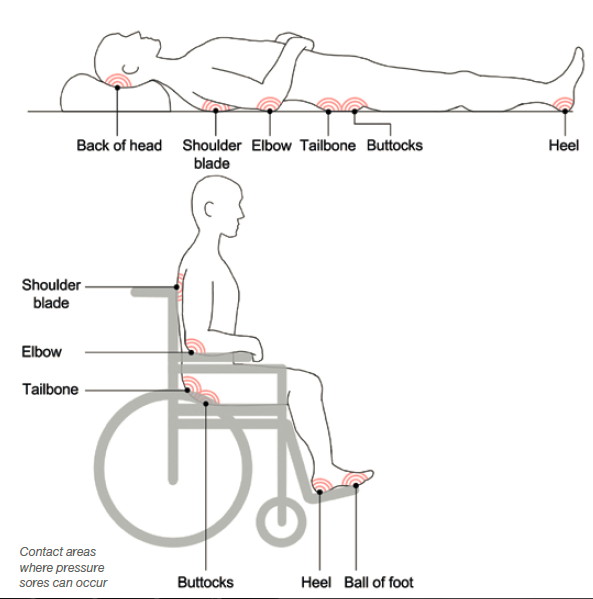
Diagram showing common pressure sore areas for a person lying in bed and sitting in a wheelchair
Common pressure areas include the back of the head, shoulder blades, elbows, tailbone, buttocks, heels and balls of the feet. Source: HealthHub Singapore.ဖိအားကျလေ့ရှိသောနေရာများတွင် ဦးခေါင်းနောက်ဘက်၊ ပခုံးရိုး၊ တံတောင်ဆစ်၊ အမြီးရိုး၊ တင်ပါး၊ ဖနောင့်နှင့် ခြေဖဝါးရှေ့ပိုင်း ပါဝင်သည်။ အရင်းအမြစ် — HealthHub Singapore။
Questions to ask during a skin checkအရေပြားစစ်ဆေးစဉ် မေးရန်မေးခွန်းများ
  • Is the area red, darker, lighter or a different colour from nearby skin?ထိုနေရာသည် နီနေသလား၊ ပိုမည်းသလား၊ ပိုဖျော့သလား သို့မဟုတ် အနီးရှိအရေပြားနှင့် အရောင်ကွာသလား။
  • Is the skin intact, or is there an open wound, blister or broken area?အရေပြားပြည့်စုံနေသလား၊ အနာပွင့်၊ အရည်ကြည်ဖု သို့မဟုတ် ပေါက်ပြဲနေရာရှိသလား။
  • Does it feel warmer, cooler, harder, softer or swollen compared with nearby skin?အနီးရှိအရေပြားနှင့် နှိုင်းယှဉ်လျှင် ပိုပူ၊ ပိုအေး၊ ပိုမာ၊ ပိုပျော့ သို့မဟုတ် ရောင်နေသလား။
  • If you press gently, does the colour fail to lighten and return? This test may be unreliable on darker skin, so also check texture, temperature and pain.ညင်သာစွာဖိသည့်အခါ အရောင်ဖျော့ပြီး ပြန်မလာဘူးလား။ အရေပြားအရောင်မည်းသူတွင် ဤစမ်းသပ်ချက် မသေချာနိုင်သောကြောင့် အသားအရေမျက်နှာပြင်၊ အပူချိန်နှင့် နာကျင်မှုကိုပါ စစ်ပါ။
  • Is there new pain, tenderness, smell, fluid or discharge?နာကျင်မှုအသစ်၊ ထိခိုက်နာကျင်မှု၊ အနံ့၊ အရည် သို့မဟုတ် ပြည်ထွက်မှုရှိသလား။

With the person’s consent, a daily photo taken in similar light and from the same distance can help document change. Do not share photos without permission.ထိုသူ၏ သဘောတူညီချက်ဖြင့် တူညီသောအလင်းနှင့် အကွာအဝေးမှ နေ့စဉ်ဓာတ်ပုံရိုက်ခြင်းက အပြောင်းအလဲကို မှတ်တမ်းတင်ရန် ကူညီနိုင်သည်။ ခွင့်ပြုချက်မရှိဘဲ ဓာတ်ပုံ မမျှဝေပါနှင့်။

Treatကုသစောင့်ရှောက်ခြင်း

  • Remove pressure from the injured area. Do not sit or lie directly on it.ဒဏ်ရာနေရာမှ ဖိအားဖယ်ရှားပါ။ ထိုနေရာပေါ် တိုက်ရိုက်မထိုင်၊ မလဲလျောင်းပါနှင့်။
  • Use pillows or suitable cushions to keep pressure away from vulnerable skin, following the person’s care plan.တစ်ဦးချင်းပြုစုမှုအစီအစဉ်အတိုင်း အန္တရာယ်ရှိသောအရေပြားမှ ဖိအားကင်းစေရန် ခေါင်းအုံး သို့မဟုတ် သင့်လျော်သောကူရှင် သုံးပါ။
  • Clean and cover an open wound only if you have been shown how, using the dressing recommended by a trained health worker.လေ့ကျင့်ထားသော ကျန်းမာရေးဝန်ထမ်းက သင်ပြထားပြီး အကြံပြုထားသော အနာဖုံးပစ္စည်းရှိမှသာ အနာပွင့်ကို သန့်ရှင်း၍ ဖုံးအုပ်ပါ။
  • Do not apply compression or tight bandaging to a pressure injury unless a qualified health worker has specifically prescribed and taught it.အရည်အချင်းပြည့်မီသော ကျန်းမာရေးဝန်ထမ်းက သီးသန့်ညွှန်ကြားသင်ပြထားခြင်းမရှိပါက ဖိအားဒဏ်ရာပေါ် ဖိအားပတ်တီး သို့မဟုတ် တင်းကျပ်သောပတ်တီး မပတ်ပါနှင့်။
  • Avoid sitting in bed for long periods because sliding can increase pressure and skin damage.လျှောကျခြင်းက ဖိအားနှင့် အရေပြားပျက်စီးမှုကို တိုးစေနိုင်သောကြောင့် အိပ်ရာပေါ်တွင် အချိန်ကြာကြာ ထိုင်မနေပါနှင့်။

Preventကာကွယ်ခြင်း

  • Follow the person’s individual positioning plan. A common starting guide is repositioning every 2 hours in bed and every 30 minutes in a chair, but some people need a different schedule.တစ်ဦးချင်းနေရာပြောင်းအစီအစဉ်ကို လိုက်နာပါ။ ယေဘုယျအစပြုလမ်းညွှန်အဖြစ် အိပ်ရာတွင် ၂ နာရီတစ်ကြိမ်နှင့် ထိုင်ခုံတွင် မိနစ် ၃၀ တစ်ကြိမ် နေရာပြောင်းနိုင်သော်လည်း လူအချို့အတွက် အချိန်ဇယားမတူနိုင်ပါ။
  • Raise the head of the bed only as needed for breathing, eating or the care plan. Too much elevation can cause sliding and extra pressure on the tailbone.အသက်ရှူခြင်း၊ စားသောက်ခြင်း သို့မဟုတ် ပြုစုမှုအစီအစဉ်အတွက် လိုအပ်သလောက်သာ အိပ်ရာခေါင်းပိုင်း မြှင့်ပါ။ အလွန်မြှင့်ပါက လျှောကျပြီး အမြီးရိုးပေါ် ဖိအားပိုနိုင်သည်။
  • Check skin once each day, such as during dressing or washing.အဝတ်ဝတ်စဉ် သို့မဟုတ် ရေဆေးစဉ်ကဲ့သို့ တစ်နေ့တစ်ကြိမ် အရေပြားစစ်ပါ။
  • Make people who cannot reposition themselves a priority for regular assistance.မိမိကိုယ်တိုင် နေရာမပြောင်းနိုင်သူများကို ပုံမှန်ကူညီရန် ဦးစားပေးပါ။
  • Choose smooth, clean, dry and breathable bedding and clothing where possible.ဖြစ်နိုင်ပါက ချောမွေ့၊ သန့်ရှင်း၊ ခြောက်သွေ့ပြီး လေဝင်လေထွက်ကောင်းသော အိပ်ရာခင်းနှင့် အဝတ်အစား ရွေးပါ။

Everyday support: what to do and what to watchနေ့စဉ်ကူညီမှု — လုပ်ဆောင်ရန်နှင့် စောင့်ကြည့်ရန်

Doလုပ်ဆောင်ရန်
  • Take an active role in skin care and speak up about pain or anything that does not feel right.အရေပြားပြုစုမှုတွင် တက်ကြွစွာပါဝင်ပြီး နာကျင်မှု သို့မဟုတ် မမှန်ကန်ဟု ခံစားရသည့်အရာကို ချက်ချင်းပြောပါ။
  • Keep skin clean and dry throughout the day.တစ်နေ့လုံး အရေပြားကို သန့်ရှင်းခြောက်သွေ့အောင် ထားပါ။
  • Check skin every day and encourage movement and repositioning as recommended.အရေပြားကို နေ့စဉ်စစ်ပြီး အကြံပြုထားသလို လှုပ်ရှားခြင်းနှင့် နေရာပြောင်းခြင်းကို အားပေးပါ။
  • Provide basic wound care only when trained and following the care plan.သင်တန်းရထားပြီး ပြုစုမှုအစီအစဉ်ကို လိုက်နာသည့်အခါသာ အခြေခံအနာပြုစုမှု လုပ်ပါ။
Do notမလုပ်ရ
  • Do not ignore pain, redness, colour change or changes in skin texture.နာကျင်မှု၊ အနီရောင်၊ အရောင်ပြောင်းမှု သို့မဟုတ် အရေပြားမျက်နှာပြင်ပြောင်းမှုကို လျစ်လျူမရှုပါနှင့်။
  • Do not forget planned movement or repositioning.စီစဉ်ထားသော လှုပ်ရှားမှု သို့မဟုတ် နေရာပြောင်းမှုကို မမေ့ပါနှင့်။
  • Do not assume there is no pressure injury just because it cannot be seen or felt easily.လွယ်ကူစွာ မမြင်ရ သို့မဟုတ် မခံစားရသောကြောင့် ဖိအားဒဏ်ရာမရှိဟု မယူဆပါနှင့်။
Positive signsကောင်းမွန်လာသည့် လက္ခဏာများ
  • Skin stays intact, clean and dry.အရေပြားမပျက်စီးဘဲ သန့်ရှင်းခြောက်သွေ့နေခြင်း။
  • The person can direct or take part in pressure relief and skin checks.ဖိအားလျှော့ခြင်းနှင့် အရေပြားစစ်ဆေးမှုကို ထိုသူက ညွှန်ကြား သို့မဟုတ် ပါဝင်နိုင်ခြင်း။
Get medical help promptlyဆေးဘက်ဆိုင်ရာအကူအညီ အမြန်ရယူပါ
  • Pain worsens, skin colour or texture changes, or an area stays red/dark after pressure is removed.နာကျင်မှုပိုဆိုးလာခြင်း၊ အရေပြားအရောင် သို့မဟုတ် မျက်နှာပြင်ပြောင်းခြင်း၊ ဖိအားဖယ်ပြီးနောက် အနီ/အမည်းအရောင် ဆက်ရှိခြင်း။
  • There is an open wound, blister, bad smell, discharge, spreading redness, fever or feeling unwell.အနာပွင့်၊ အရည်ကြည်ဖု၊ အနံ့ဆိုး၊ အရည်ထွက်မှု၊ အနီရောင်ပျံ့မှု၊ ဖျားခြင်း သို့မဟုတ် နေမကောင်းဖြစ်ခြင်း။

Mobility and exerciseသွားလာလှုပ်ရှားမှုနှင့် လေ့ကျင့်ခန်း

Movement needs differ according to the type and severity of the neurological condition and the likely course of recovery. A medical or rehabilitation worker should assess safety, independence and the amount of help needed before exercise or transfer practice begins.အာရုံကြောဆိုင်ရာအခြေအနေ၏ အမျိုးအစား၊ ပြင်းထန်မှုနှင့် ပြန်လည်ကောင်းမွန်နိုင်မည့် လမ်းကြောင်းအလိုက် လှုပ်ရှားမှုလိုအပ်ချက် မတူပါ။ လေ့ကျင့်ခန်း သို့မဟုတ် နေရာပြောင်းလေ့ကျင့်မှု မစမီ ဆေးဘက် သို့မဟုတ် ပြန်လည်သန်စွမ်းရေးဝန်ထမ်းက ဘေးကင်းမှု၊ ကိုယ်တိုင်လုပ်နိုင်မှုနှင့် လိုအပ်သောအကူအညီပမာဏကို စစ်ဆေးသင့်သည်။

Occupational therapy focusလုပ်ငန်းကုထုံး အဓိကထားချက်

Practise movement through activities the person needs or values—rolling for dressing, sitting for meals, reaching for household items, transferring to a toilet or walking a useful short route. Adapt the task and environment, then increase difficulty one small step at a time.အဝတ်ဝတ်ရန် လှိမ့်ခြင်း၊ စားသောက်ရန် ထိုင်ခြင်း၊ အိမ်သုံးပစ္စည်းလှမ်းယူခြင်း၊ အိမ်သာသို့ နေရာပြောင်းခြင်း သို့မဟုတ် အသုံးဝင်သော အကွာအဝေးတို လမ်းလျှောက်ခြင်းကဲ့သို့ ထိုသူလိုအပ် သို့မဟုတ် တန်ဖိုးထားသောလုပ်ငန်းများမှတစ်ဆင့် လှုပ်ရှားမှုကို လေ့ကျင့်ပါ။ လုပ်ငန်းနှင့် ပတ်ဝန်းကျင်ကို လိုက်လျောညီထွေပြင်ဆင်ပြီး အခက်အခဲကို တစ်ဆင့်ချင်းသာ တိုးပါ။

Get clearanceခွင့်ပြုချက်ရယူပါCheck that movement is medically safe.လှုပ်ရှားမှု ဆေးဘက်ဆိုင်ရာအရ ဘေးကင်းကြောင်း စစ်ပါ။

Add supportအထောက်အကူထည့်ပါUse a stable chair, rail or trained helper.တည်ငြိမ်သောထိုင်ခုံ၊ လက်ကိုင်တန်း သို့မဟုတ် လေ့ကျင့်ထားသူကို အသုံးပြုပါ။

Start smallသေးငယ်စွာစပါBegin with easy, short practice.လွယ်ကူပြီး တိုတောင်းသော လေ့ကျင့်မှုဖြင့် စပါ။

Everyday support: what to do and what to watchနေ့စဉ်ကူညီမှု — လုပ်ဆောင်ရန်နှင့် စောင့်ကြည့်ရန်

Doလုပ်ဆောင်ရန်
  • Seek medical advice and clearance before movement or exercise.လှုပ်ရှားမှု သို့မဟုတ် လေ့ကျင့်ခန်းမစမီ ဆေးဘက်ဆိုင်ရာအကြံဉာဏ်နှင့် ခွင့်ပြုချက် ရယူပါ။
  • Ensure the person is medically stable and the space is safe.ထိုသူ၏ ဆေးဘက်ဆိုင်ရာအခြေအနေ တည်ငြိမ်ပြီး နေရာဘေးကင်းကြောင်း သေချာပါစေ။
  • Start movement practice as early as advised after clearance.ခွင့်ပြုချက်ရပြီးနောက် အကြံပြုထားသလို လှုပ်ရှားမှုလေ့ကျင့်မှုကို စောစီးစွာ စပါ။
  • Use safe physical support from a trained person, stable table or secure handrail when needed.လိုအပ်ပါက လေ့ကျင့်ထားသူ၊ တည်ငြိမ်သောစားပွဲ သို့မဟုတ် ခိုင်ခံ့သောလက်ကိုင်တန်း၏ ဘေးကင်းသောအထောက်အကူကို သုံးပါ။
  • Use active movement the person can do alone and assisted or passive movement only as recommended.ထိုသူကိုယ်တိုင် လုပ်နိုင်သော တက်ကြွလှုပ်ရှားမှုနှင့် အကြံပြုထားမှသာ အကူအညီပါ သို့မဟုတ် အခြားသူက လှုပ်ပေးသောလှုပ်ရှားမှုကို သုံးပါ။
  • Start with light stretches, a short walk or a few minutes of seated movement.ပေါ့ပါးသောဆန့်လေ့ကျင့်မှု၊ တိုတောင်းသောလမ်းလျှောက်မှု သို့မဟုတ် မိနစ်အနည်းငယ်ထိုင်လျက် လှုပ်ရှားမှုဖြင့် စပါ။
  • Increase one small step at a time as ability and confidence improve—for example, 5 minutes of seated stretches, then 10 minutes.စွမ်းရည်နှင့် ယုံကြည်မှုတိုးလာသလို တစ်ဆင့်ချင်းသာ တိုးပါ — ဥပမာ ထိုင်လျက်ဆန့်လေ့ကျင့်မှု ၅ မိနစ်မှ ၁၀ မိနစ်သို့။
  • Consider the person’s motivation, needs, goals and preferences.ထိုသူ၏ စိတ်အားထက်သန်မှု၊ လိုအပ်ချက်၊ ရည်မှန်းချက်နှင့် နှစ်သက်မှုကို စဉ်းစားပါ။
Do notမလုပ်ရ
  • Do not assume how independent the person is or how much help they need.ထိုသူ ကိုယ်တိုင်မည်မျှလုပ်နိုင်သည် သို့မဟုတ် အကူအညီမည်မျှလိုသည်ကို မယူဆပါနှင့်။
  • Do not start before the person is medically ready.ဆေးဘက်ဆိုင်ရာအရ အဆင်သင့်မဖြစ်မီ မစပါနှင့်။
  • Do not force a movement, stretch or transfer through pain, fear or marked fatigue.နာကျင်မှု၊ ကြောက်ရွံ့မှု သို့မဟုတ် အလွန်ပင်ပန်းမှုရှိနေစဉ် လှုပ်ရှားမှု၊ ဆန့်မှု သို့မဟုတ် နေရာပြောင်းမှုကို အတင်းမလုပ်ပါနှင့်။
Positive signsကောင်းမွန်လာသည့် လက္ခဏာများ
  • Movement becomes safer, smoother or needs less help.လှုပ်ရှားမှု ပိုဘေးကင်း၊ ပိုချောမွေ့ သို့မဟုတ် အကူအညီလျော့လာခြင်း။
  • The person can practise for longer without symptoms worsening.လက္ခဏာမပိုဆိုးဘဲ ပိုကြာကြာ လေ့ကျင့်နိုင်ခြင်း။
  • Confidence and participation in meaningful activities increase.ယုံကြည်မှုနှင့် အဓိပ္ပာယ်ရှိသောလုပ်ငန်းများတွင် ပါဝင်မှု တိုးလာခြင်း။
Low-cost community ideasကုန်ကျစရိတ်နည်းသော ရပ်ရွာအကြံများ
  • Practise a meaningful task such as reaching for clothing or standing at a safe table.အဝတ်လှမ်းယူခြင်း သို့မဟုတ် ဘေးကင်းသောစားပွဲနား ရပ်ခြင်းကဲ့သို့ အဓိပ္ပာယ်ရှိသောလုပ်ငန်းကို လေ့ကျင့်ပါ။
  • Use a timer to keep practice short and allow rest.လေ့ကျင့်ချိန်တိုစေပြီး အနားပေးရန် အချိန်တိုင်းကိရိယာ သုံးပါ။
  • Record what was safe, difficult and enjoyable.ဘေးကင်းသော၊ ခက်ခဲသောနှင့် ပျော်ရွှင်သောအရာများကို မှတ်တမ်းတင်ပါ။
Movement and exercise videosလှုပ်ရှားမှုနှင့် လေ့ကျင့်ခန်းဗီဒီယိုများ

Use these videos only after medical or rehabilitation clearance. Stop if pain, dizziness, breathing difficulty, new weakness or other symptoms worsen.ဆေးဘက် သို့မဟုတ် ပြန်လည်သန်စွမ်းရေးခွင့်ပြုချက်ရပြီးမှသာ ဤဗီဒီယိုများကို အသုံးပြုပါ။ နာကျင်မှု၊ မူးဝေမှု၊ အသက်ရှူခက်မှု၊ အားနည်းမှုအသစ် သို့မဟုတ် အခြားလက္ခဏာများ ပိုဆိုးပါက ရပ်ပါ။

Cognitionစဉ်းစားမှတ်သားမှု

Cognition means the mental skills used to pay attention, remember, understand, plan, solve problems and control behaviour. A brain injury can make these skills slower or less reliable, even when there is no visible injury.စဉ်းစားမှတ်သားမှုဆိုသည်မှာ အာရုံစိုက်ခြင်း၊ မှတ်မိခြင်း၊ နားလည်ခြင်း၊ စီစဉ်ခြင်း၊ ပြဿနာဖြေရှင်းခြင်းနှင့် အပြုအမူထိန်းချုပ်ခြင်းအတွက် အသုံးပြုသော စိတ်ပိုင်းဆိုင်ရာစွမ်းရည်များဖြစ်သည်။ ဦးနှောက်ဒဏ်ရာကြောင့် မြင်သာသောဒဏ်ရာမရှိသော်လည်း ဤစွမ်းရည်များ နှေးကွေး သို့မဟုတ် မတည်ငြိမ်နိုင်သည်။

Occupational therapy focusလုပ်ငန်းကုထုံး အဓိကထားချက်

Support thinking skills within real daily occupations rather than isolated tests. Break cooking, medication routines, phone use, shopping, study or work into manageable steps; use visual cues and routines; and adjust noise, timing and assistance so the person can participate safely and successfully.သီးခြားစမ်းသပ်မှုများထက် လက်တွေ့နေ့စဉ်လုပ်ငန်းများအတွင်း စဉ်းစားမှတ်သားမှုစွမ်းရည်ကို ကူညီပါ။ ချက်ပြုတ်ခြင်း၊ ဆေးသောက်လုပ်ရိုးလုပ်စဉ်၊ ဖုန်းအသုံးပြုခြင်း၊ ဈေးဝယ်ခြင်း၊ စာသင်ခြင်း သို့မဟုတ် အလုပ်ကို ကိုင်တွယ်နိုင်သော အဆင့်များအဖြစ် ခွဲပါ။ ထိုသူ ဘေးကင်းပြီး အောင်မြင်စွာ ပါဝင်နိုင်ရန် ပုံအချက်ပြ၊ လုပ်ရိုးလုပ်စဉ်၊ ဆူညံသံ၊ အချိန်နှင့် အကူအညီပမာဏကို လိုက်လျောညီထွေပြင်ဆင်ပါ။

What you may seeတွေ့ရနိုင်သည့် လက္ခဏာများ
  • Forgetting conversations, appointments or steps in a taskစကားပြောခဲ့မှု၊ ချိန်းဆိုမှု သို့မဟုတ် လုပ်ငန်းအဆင့်များ မေ့ခြင်း
  • Difficulty concentrating, following instructions or coping with noiseအာရုံစိုက်ခြင်း၊ ညွှန်ကြားချက်လိုက်နာခြင်း သို့မဟုတ် ဆူညံသံကို ကိုင်တွယ်ခြင်း ခက်ခဲခြင်း
  • Slow thinking, difficulty planning or starting an activityစဉ်းစားမှုနှေးခြင်း၊ လုပ်ငန်းစီစဉ်ခြင်း သို့မဟုတ် စတင်ခြင်း ခက်ခဲခြင်း
  • Irritability, impulsive behaviour, low mood or reduced awareness of riskစိတ်တိုလွယ်ခြင်း၊ မစဉ်းစားဘဲလုပ်ခြင်း၊ စိတ်ဓာတ်ကျခြင်း သို့မဟုတ် အန္တရာယ်သိရှိမှုလျော့ခြင်း
  • Mental fatigue that worsens later in the dayနေ့နောက်ပိုင်းတွင် ပိုဆိုးလာသော စိတ်ပင်ပန်းမှု
How family and community can helpမိသားစုနှင့် ရပ်ရွာက ကူညီနိုင်ပုံ

One stepတစ်ဆင့်ချင်းGive one short instruction at a time.တစ်ကြိမ်လျှင် ညွှန်ကြားချက်တိုတစ်ခုသာ ပေးပါ။

Reduce noiseဆူညံသံလျှော့ပါUse a calm, quiet space.တည်ငြိမ်တိတ်ဆိတ်သောနေရာ သုံးပါ။

Use remindersသတိပေးချက်သုံးပါWrite down routines and appointments.လုပ်ရိုးလုပ်စဉ်နှင့် ချိန်းဆိုမှုကို ရေးထားပါ။

Plan restအနားယူချိန်ထားပါStop before fatigue becomes severe.အလွန်ပင်ပန်းမလာမီ ရပ်ပါ။

Low-cost community ideasကုန်ကျစရိတ်နည်းသော ရပ်ရွာအကြံများ
  • Use a notebook, wall calendar or phone alarms.မှတ်စုစာအုပ်၊ နံရံပြက္ခဒိန် သို့မဟုတ် ဖုန်းသတိပေးချက် သုံးပါ။
  • Label important drawers, containers and places.အရေးကြီးသော အံဆွဲ၊ ဘူးနှင့် နေရာများတွင် အမည်တပ်ပါ။
  • Practise one familiar activity at the same time each day.ရင်းနှီးသောလုပ်ငန်းတစ်ခုကို နေ့တိုင်း အချိန်တူတွင် လေ့ကျင့်ပါ။
  • Use pictures or a short checklist for multi-step tasks.အဆင့်များသောလုပ်ငန်းအတွက် ပုံ သို့မဟုတ် စစ်ဆေးစာရင်းတို သုံးပါ။

Everyday support: what to do and what to watchနေ့စဉ်ကူညီမှု — လုပ်ဆောင်ရန်နှင့် စောင့်ကြည့်ရန်

Doလုပ်ဆောင်ရန်
  • Speak slowly, use plain words and allow extra response time.ဖြည်းဖြည်းပြော၍ ရိုးရှင်းသောစကားလုံးသုံးပြီး တုံ့ပြန်ရန် အချိန်ပိုပေးပါ။
  • Keep routines predictable and practise meaningful tasks in short sessions.လုပ်ရိုးလုပ်စဉ်ကို ကြိုတင်သိနိုင်အောင်ထားပြီး အဓိပ္ပာယ်ရှိသောလုပ်ငန်းများကို အချိန်တိုဖြင့် လေ့ကျင့်ပါ။
  • Include the person in decisions and praise effort, not only results.ဆုံးဖြတ်ချက်များတွင် ထိုသူကို ပါဝင်စေပြီး ရလဒ်သာမက ကြိုးစားမှုကိုပါ ချီးကျူးပါ။
Do notမလုပ်ရ
  • Do not argue about a memory error, shame the person or treat them like a child.မှတ်ဉာဏ်မှားမှုအတွက် မငြင်းခုံ၊ မရှက်စေ၊ ကလေးကဲ့သို့ မဆက်ဆံပါနှင့်။
  • Do not give several instructions at once or overload a tired person.ညွှန်ကြားချက်များစွာ တစ်ပြိုင်တည်းမပေးပါနှင့်၊ ပင်ပန်းနေသူကို လုပ်ငန်းများလွန်းမပေးပါနှင့်။
Positive signsကောင်းမွန်လာသည့် လက္ခဏာများ
  • The person completes more steps with fewer prompts.သတိပေးချက်နည်း၍ လုပ်ငန်းအဆင့်များ ပိုလုပ်နိုင်ခြင်း။
  • Attention, confidence and participation gradually improve.အာရုံစိုက်မှု၊ ယုံကြည်မှုနှင့် ပါဝင်မှု တဖြည်းဖြည်းတိုးလာခြင်း။
Get medical help urgentlyဆေးဘက်ဆိုင်ရာအကူအညီ အရေးပေါ်ရယူပါ
  • Worsening confusion, repeated vomiting, seizure, fainting, new weakness, unequal pupils, severe worsening headache or unusual difficulty waking.စိတ်ရှုပ်ထွေးမှုပိုဆိုးခြင်း၊ ထပ်ခါအန်ခြင်း၊ တက်ခြင်း၊ သတိလစ်ခြင်း၊ အားနည်းမှုအသစ်၊ မျက်ဆန်နှစ်ဖက်မညီခြင်း၊ ခေါင်းကိုက်မှုအလွန်ပိုဆိုးခြင်း သို့မဟုတ် နိုးရန် အလွန်ခက်ခြင်း။
Injury guide 2ဒဏ်ရာလမ်းညွှန် ၂

Limb loss, burns and bone or joint injuriesခြေလက်ဆုံးရှုံးမှု၊ မီးလောင်မှုနှင့် အရိုး/အဆစ်ဒဏ်ရာများ

Landmines, unexploded weapons, gunshots, burns and building collapse can cause limb loss, burns, broken bones and other physical injuries. Family and community support can protect dignity, make daily activities easier and help the person reconnect with home, work and community—while wound care, equipment fitting and exercise plans remain with trained workers.မြေမြှုပ်မိုင်း၊ မပေါက်ကွဲသေးသောလက်နက်၊ သေနတ်ဒဏ်ရာ၊ မီးလောင်မှုနှင့် အဆောက်အအုံပြိုကျမှုတို့သည် ခြေလက်ဆုံးရှုံးမှု၊ မီးလောင်ဒဏ်ရာ၊ အရိုးကျိုးမှုနှင့် အခြားကိုယ်ကာယဒဏ်ရာများကို ဖြစ်စေနိုင်သည်။ မိသားစုနှင့် ရပ်ရွာက ဂုဏ်သိက္ခာကို ကာကွယ်၊ နေ့စဉ်လုပ်ငန်းများကို လွယ်ကူစေပြီး အိမ်၊ အလုပ်နှင့် ရပ်ရွာသို့ ပြန်လည်ချိတ်ဆက်ရန် ကူညီနိုင်သော်လည်း ဒဏ်ရာပြုစုမှု၊ ကိရိယာအံဝင်အောင်ပြုလုပ်မှုနှင့် လေ့ကျင့်ခန်းအစီအစဉ်ကို လေ့ကျင့်ထားသူများထံ ထားရမည်။

Limb loss and amputationခြေလက်ဆုံးရှုံးမှုနှင့် ဖြတ်တောက်ခြင်း

Landmines and blasts can lead to the loss of part of an arm or leg. Recovery includes healing, learning new ways to do everyday activities, deciding whether a prosthesis is useful and adjusting emotionally and socially. Family and community members can support dignity and participation; wound care, bandaging and prosthetic fitting need trained workers.မြေမြှုပ်မိုင်းနှင့် ပေါက်ကွဲမှုများကြောင့် လက် သို့မဟုတ် ခြေတစ်စိတ်တစ်ပိုင်း ဆုံးရှုံးနိုင်သည်။ ပြန်လည်ကောင်းမွန်ရေးတွင် ဒဏ်ရာကျက်ခြင်း၊ နေ့စဉ်လုပ်ငန်းနည်းသစ်များ သင်ယူခြင်း၊ ခြေတုလက်တုအသုံးဝင်မည်မည် ဆုံးဖြတ်ခြင်းနှင့် စိတ်/လူမှုရေး လိုက်လျောညီထွေဖြစ်ခြင်း ပါဝင်သည်။ မိသားစုနှင့် ရပ်ရွာက ဂုဏ်သိက္ခာနှင့် ပါဝင်မှုကို ထောက်ပံ့နိုင်သော်လည်း ဒဏ်ရာပြုစုမှု၊ ပတ်တီးစည်းမှုနှင့် ခြေတုလက်တုအံဝင်အောင်ပြုလုပ်မှုကို လေ့ကျင့်ထားသူများထံ ထားရမည်။

What you may seeတွေ့ရနိုင်သည့် လက္ခဏာများ
  • Swelling, an unusual shape or pain in the remaining part of the arm or leg (residual limb)ကျန်ရှိသော လက် သို့မဟုတ် ခြေတစ်စိတ်တစ်ပိုင်း (residual limb) တွင် ရောင်ရမ်းမှု၊ ပုံစံမမှန်မှု သို့မဟုတ် နာကျင်မှု
  • Phantom limb sensation and phantom painမရှိတော့သောအင်္ဂါကို ခံစားရခြင်းနှင့် နာကျင်ခြင်း (phantom pain)
  • The knee or hip becoming stiff and difficult to straighten after staying bent for a long timeအချိန်ကြာကြာကွေးထားပြီးနောက် ဒူး သို့မဟုတ် တင်ပါးဆစ် တောင့်တင်း၍ ဖြောင့်ရန်ခက်လာခြင်း
  • Grief, shame, withdrawal from community and workဝမ်းနည်းမှု၊ ရှက်ရွံ့မှု၊ လူမှုအသိုင်းအဝိုင်းနှင့် အလုပ်မှ ဆုတ်ခွာနေခြင်း
How family and community can helpမိသားစုနှင့် ရပ်ရွာက ကူညီနိုင်ပုံ
  • Ask what the person wants to do again and help break that activity into manageable, safe stepsမည်သည့်လုပ်ငန်းကို ပြန်လုပ်လိုသည်ကို မေး၍ ထိုလုပ်ငန်းကို လုပ်နိုင်ပြီး ဘေးကင်းသောအဆင့်များအဖြစ် ခွဲရန် ကူညီပါ
  • Help inspect the healed residual limb and any prosthesis contact areas; report persistent redness, blisters or broken skinကျက်နေသော ခြေလက်အဆုံးပိုင်းနှင့် ခြေတုလက်တုထိသောနေရာများကို စစ်ရန် ကူညီပြီး မပျောက်သောနီခြင်း၊ အရည်ကြည်ဖု သို့မဟုတ် အရေပြားပေါက်ခြင်းကို တင်ပြပါ
  • Use seated versions of household or work tasks while balance and mobility are limitedဟန်ချက်နှင့် သွားလာနိုင်မှုကန့်သတ်နေချိန် အိမ်မှု သို့မဟုတ် အလုပ်ကို ထိုင်၍လုပ်နိုင်သောနည်းသုံးပါ
  • Follow the mobility, exercise and prosthesis plan taught to that person; contact the fitter if the device becomes painful or looseထိုလူကို သင်ပေးထားသော သွားလာမှု၊ လေ့ကျင့်ခန်းနှင့် ခြေတုလက်တုအစီအစဉ်ကို လိုက်နာပြီး ကိရိယာနာကျင် သို့မဟုတ် လျော့လာပါက တပ်ဆင်ပေးသူကို ဆက်သွယ်ပါ
  • Invite the person back into family, farming, market, worship and community roles, and connect them with peers if they wantမိသားစု၊ လယ်ယာ၊ ဈေး၊ ဘာသာရေးနှင့် ရပ်ရွာတာဝန်များသို့ ပြန်ပါဝင်ရန် ဖိတ်ခေါ်ပြီး လိုချင်ပါက အလားတူအတွေ့အကြုံရှိသူများနှင့် ချိတ်ဆက်ပါ
Low-cost community ideasကုန်ကျစရိတ်နည်းသော ရပ်ရွာအကြံများ

If prosthetic support is difficult to access, use the organisations in Resources to look for a trained prosthetic or rehabilitation service. Meanwhile, organise a clear home route, bring tasks to a stable seated position and use only a mobility aid that has been safely fitted or checked. Do not make a bamboo peg, prosthesis or compression wrap without trained guidance.ခြေတုလက်တုအကူအညီရရန် ခက်ခဲပါက အရင်းအမြစ်များရှိ အဖွဲ့အစည်းများမှတစ်ဆင့် လေ့ကျင့်ထားသော ခြေတုလက်တု သို့မဟုတ် ပြန်လည်သန်စွမ်းရေးဝန်ဆောင်မှုကို ရှာပါ။ ထိုအတောအတွင်း အိမ်တွင်းလမ်းကြောင်းရှင်းထား၍ လုပ်ငန်းများကို တည်ငြိမ်စွာထိုင်ပြီး လုပ်နိုင်အောင် စီစဉ်ပြီး ဘေးကင်းစွာအံဝင်အောင်လုပ် သို့မဟုတ် စစ်ထားသော သွားလာကိရိယာကိုသာ အသုံးပြုပါ။ လေ့ကျင့်ထားသူ၏လမ်းညွှန်မှုမရှိဘဲ ဝါးခြေတိုင်၊ ခြေတုလက်တု သို့မဟုတ် ဖိအားပတ်တီး မပြုလုပ်ပါနှင့်။

Using crutches or a cane: step by stepချိုင်းထောက် သို့မဟုတ် တုတ်ကောက် အသုံးပြုနည်း အဆင့်လိုက်

First get medical clearance and hands-on fitting. The safe aid and walking pattern depend on balance, arm strength and how much weight the injured leg is allowed to take. Wear secure footwear and practise with another person nearby.အရင်ဆုံး ဆေးဘက်ဆိုင်ရာခွင့်ပြုချက်နှင့် လက်တွေ့အံဝင်အောင်စစ်မှု ရယူပါ။ ဘေးကင်းသောအကူကိရိယာနှင့် လမ်းလျှောက်ပုံသည် မျှတမှု၊ လက်အားနှင့် ဒဏ်ရာရခြေက ခံနိုင်သည့်အလေးချိန်ပေါ် မူတည်သည်။ ခိုင်မာသောဖိနပ်ဝတ်ပြီး အနီးတွင် အကူတစ်ဦးရှိစဉ် လေ့ကျင့်ပါ။

1. Measure and check၁။ တိုင်းတာစစ်ဆေးပါ

For underarm crutches, stand tall with the tips slightly forward and out to the side. Leave about two or three finger-widths below the armpit; the handgrip should allow a small elbow bend. Weight goes through the hands—not the armpits. Check rubber tips and bolts before use.ချိုင်းအောက်ထောက်ကို သုံးရာတွင် မတ်မတ်ရပ်ပြီး ထောက်တံအောက်စွန်းကို ခြေရှေ့နှင့် ဘေးသို့ အနည်းငယ်ထားပါ။ ချိုင်းအောက်တွင် လက်ချောင်းနှစ်သုံးချောင်းစာ နေရာချန်ပြီး လက်ကိုင်ကို ကိုင်သည့်အခါ တံတောင်ဆစ် အနည်းငယ်ကွေးရမည်။ ကိုယ်အလေးချိန်ကို ချိုင်းမဟုတ်ဘဲ လက်မှတစ်ဆင့် ခံပါ။ ရာဘာအောက်စွန်းနှင့် ဝက်အူများ စစ်ပါ။

2. Use the taught walking pattern၂။ သင်ပေးထားသော လမ်းလျှောက်ပုံ သုံးပါ

Three-point: move both crutches, then the injured leg as permitted, then step through with the stronger leg. Two-point: move one crutch with the opposite foot, then repeat. Four-point: move one crutch, the opposite foot, the other crutch, then the other foot. Use only the pattern taught for that person.သုံးချက်ပုံစံ: ချိုင်းထောက်နှစ်ချောင်းကို ရှေ့ရွှေ့၊ ခွင့်ပြုသလောက် ဒဏ်ရာရခြေကို ရွှေ့၊ ထို့နောက် သန်မာသောခြေဖြင့် ရှေ့တိုးပါ။ နှစ်ချက်ပုံစံ: ချိုင်းထောက်တစ်ချောင်းနှင့် ဆန့်ကျင်ဘက်ခြေကို အတူရွှေ့ပြီး ထပ်လုပ်ပါ။ လေးချက်ပုံစံ: ချိုင်းထောက်တစ်ချောင်း၊ ဆန့်ကျင်ဘက်ခြေ၊ အခြားချိုင်းထောက်၊ ကျန်ခြေ အစဉ်လိုက်ရွှေ့ပါ။ ထိုသူအတွက် သင်ပေးထားသောပုံစံကိုသာ သုံးပါ။

3. Steps and stairs၃။ လှေကားနှင့် အဆင့်များ

Use a handrail when available. Going up: stronger leg first, then the injured leg and crutches. Going down: crutches first, then the injured leg, then the stronger leg. Do not attempt stairs until a trained worker has taught and checked the technique.ရနိုင်ပါက လက်ကိုင်တန်းသုံးပါ။ တက်ရာတွင် သန်မာသောခြေ အရင်တက်၊ ထို့နောက် ဒဏ်ရာရခြေနှင့် ချိုင်းထောက်လိုက်ပါ။ ဆင်းရာတွင် ချိုင်းထောက် အရင်ချ၊ ဒဏ်ရာရခြေ၊ ထို့နောက် သန်မာသောခြေ လိုက်ပါ။ လေ့ကျင့်ထားသူက သင်ပြစစ်ဆေးမပေးမီ လှေကား မစမ်းပါနှင့်။

4. Using one cane၄။ တုတ်ကောက်တစ်ချောင်း သုံးခြင်း

Hold the cane in the hand opposite the weaker or injured leg. Move the cane and weaker leg forward together, then step through with the stronger leg. Turn with small steps; do not twist suddenly.တုတ်ကောက်ကို အားနည်း သို့မဟုတ် ဒဏ်ရာရခြေနှင့် ဆန့်ကျင်ဘက်လက်တွင် ကိုင်ပါ။ တုတ်ကောက်နှင့် အားနည်းခြေကို အတူရှေ့ရွှေ့ပြီး သန်မာသောခြေဖြင့် ကျော်လှမ်းပါ။ ကွေ့ရာတွင် ခြေလှမ်းသေးသေးဖြင့် လှည့်ပြီး ရုတ်တရက် မလိမ်ပါနှင့်။

Everyday support: what to do and what to watchနေ့စဉ်ကူညီမှု — လုပ်ဆောင်ရန်နှင့် စောင့်ကြည့်ရန်

Positive signs show progress, but do not replace medical review.ကောင်းမွန်လာသည့် လက္ခဏာများသည် တိုးတက်မှုကို ပြသသော်လည်း ဆေးဘက်ဆိုင်ရာ စစ်ဆေးမှုကို အစားမထိုးနိုင်ပါ။

Doလုပ်ဆောင်ရန်
  • Inspect the residual limb every day; keep healed skin clean and dryဖြတ်တောက်ထားသော ခြေလက်အဆုံးပိုင်းကို နေ့စဉ်စစ်ဆေးပြီး ကျက်နေသောအရေပြားကို သန့်ရှင်းခြောက်သွေ့အောင်ထားပါ
  • Maintain joint movement and strength, and increase activity gradually with safe supportအဆစ်လှုပ်ရှားမှုနှင့် အားကို ထိန်းသိမ်းပြီး ဘေးကင်းသောအကူအညီဖြင့် လုပ်ဆောင်မှုကို တဖြည်းဖြည်းတိုးပါ
Do notမလုပ်ရ
  • Do not wear a poorly fitting prosthesis over broken, blistered, or persistently red skinပေါက်ပြဲ၊ အရည်ကြည်ဖု သို့မဟုတ် မပျောက်သောအနီရောင်အရေပြားပေါ် အံမဝင်သော ခြေတုလက်တု မဝတ်ပါနှင့်
  • Do not rush weight-bearing or ignore new swelling, drainage, or severe painကိုယ်အလေးချိန်ခံခြင်းကို အလျင်မလုပ်ပါနှင့်၊ ရောင်ရမ်းမှုအသစ်၊ အရည်ထွက်ခြင်း သို့မဟုတ် ပြင်းထန်နာကျင်မှုကို လျစ်လျူမရှုပါနှင့်
Positive signsကောင်းမွန်လာသည့် လက္ခဏာများ
  • The wound is closed and dry, swelling reduces, and skin remains intactဒဏ်ရာပိတ်၍ ခြောက်သွေ့လာခြင်း၊ ရောင်ရမ်းမှုလျော့ခြင်းနှင့် အရေပြားမပျက်စီးခြင်း
  • Activity or prosthesis time increases without lasting redness or painကြာရှည်နီခြင်း သို့မဟုတ် နာကျင်ခြင်းမရှိဘဲ လုပ်ဆောင်ချိန် သို့မဟုတ် ခြေတုလက်တုဝတ်ချိန် တိုးလာခြင်း
Get medical adviceဆေးဘက်ဆိုင်ရာအကြံဉာဏ် ရယူပါ
  • Wound breakdown, discharge, odour, or fever (infection)ဒဏ်ရာပြန်ပွင့်ခြင်း၊ ပြည်ထွက်ခြင်း၊ အနံ့ဆိုးခြင်း သို့မဟုတ် ဖျားခြင်း (ပိုးဝင်ခြင်း)
  • Severe uncontrolled pain, or bone protruding through skinထိန်းမနိုင်သော ပြင်းထန်နာကျင်မှု သို့မဟုတ် အရိုးအရေပြားထဲမှ ထိုးထွက်နေခြင်း

Burnsမီးလောင်ဒဏ်ရာများ

After a burn has healed, scar tissue may become thick, dry or tight and make everyday movement harder. A contracture happens when scarred skin and tissues shorten and hold a joint or body part in a bent or limited position. This can affect dressing, washing, eating, walking, sleeping, work and social participation. Early, consistent rehabilitation can reduce avoidable loss of movement.မီးလောင်ဒဏ်ရာကျက်ပြီးနောက် အမာရွတ်တစ်ရှူးသည် ထူ၊ ခြောက် သို့မဟုတ် တင်းလာ၍ နေ့စဉ်လှုပ်ရှားမှုကို ခက်စေနိုင်သည်။ Contracture (အမာရွတ်တင်းကျပ်မှု) ဆိုသည်မှာ အမာရွတ်ရှိအရေပြားနှင့် တစ်ရှူးများ တိုလာပြီး အဆစ် သို့မဟုတ် ကိုယ်ခန္ဓာအစိတ်အပိုင်းကို ကွေး သို့မဟုတ် ကန့်သတ်ထားသည့်အနေအထားတွင် ဆွဲထားခြင်းဖြစ်သည်။ အဝတ်ဝတ်၊ ရေဆေး၊ စားသောက်၊ လမ်းလျှောက်၊ အိပ်စက်၊ အလုပ်နှင့် လူမှုပါဝင်မှုကို ထိခိုက်နိုင်သည်။ စောစီးစွာ တသမတ်တည်း ပြန်လည်သန်စွမ်းရေးလုပ်ခြင်းက ရှောင်လွှဲနိုင်သော လှုပ်ရှားမှုဆုံးရှုံးမှုကို လျှော့နိုင်သည်။

Burn recovery timelineမီးလောင်ဒဏ်ရာ ပြန်လည်ကောင်းမွန်ရေး အချိန်လိုင်း

1. Wound still open or fragile၁။ ဒဏ်ရာပွင့် သို့မဟုတ် နုနယ်နေချိန်

Follow the wound and dressing plan. Use only positions and movement cleared by the burn team. Keep unaffected joints moving and continue safe daily roles. Do not massage an open wound or newly grafted skin.ဒဏ်ရာနှင့် အုပ်ပတ်အစီအစဉ်ကို လိုက်နာပါ။ မီးလောင်ကုသရေးအဖွဲ့ ခွင့်ပြုသော ကိုယ်နေအထားနှင့် လှုပ်ရှားမှုကိုသာ သုံးပါ။ မထိခိုက်သောအဆစ်များ လှုပ်ရှားပြီး ဘေးကင်းသောနေ့စဉ်တာဝန်များ ဆက်လုပ်ပါ။ ပွင့်နေသောဒဏ်ရာ သို့မဟုတ် အသစ်အစားထိုးထားသောအရေပြားကို မနှိပ်နယ်ပါနှင့်။

2. Skin closed and cleared၂။ အရေပြားပိတ်ပြီး ခွင့်ပြုချက်ရချိန်

Use unperfumed moisturiser and scar massage only as taught. Practise gentle stretching, prescribed positioning and meaningful activities such as grooming or meal preparation. Stop if skin splits, blisters or pain sharply increases.အနံ့မပါသော အစိုဓာတ်ထိန်းခရင်မ်နှင့် အမာရွတ်နှိပ်နယ်မှုကို သင်ပေးထားသလိုသာ သုံးပါ။ နူးညံ့သောဆန့်ခြင်း၊ သတ်မှတ်ကိုယ်နေအထားနှင့် မိမိကိုယ်ကိုပြင်ဆင်ခြင်း သို့မဟုတ် အစားအစာပြင်ခြင်းကဲ့သို့ အဓိပ္ပာယ်ရှိလုပ်ငန်းများ လေ့ကျင့်ပါ။ အရေပြားကွဲ၊ ဖုထ သို့မဟုတ် နာကျင်မှုရုတ်တရက်တိုးပါက ရပ်ပါ။

3. Scar maturing၃။ အမာရွတ် ရင့်လာချိန်

Scars may change for many months. Continue the prescribed stretch, splint or pressure-garment plan, check skin daily and grade real-life tasks. Splints and pressure garments must be professionally fitted and reviewed.အမာရွတ်များသည် လများစွာ ပြောင်းလဲနိုင်သည်။ သတ်မှတ်ထားသော ဆန့်ခြင်း၊ ပြားထောက် သို့မဟုတ် ဖိအားဝတ်စုံအစီအစဉ်ကို ဆက်လုပ်၊ အရေပြားနေ့စဉ်စစ်ပြီး လက်တွေ့လုပ်ငန်းကို အဆင့်ညှိပါ။ ပြားထောက်နှင့် ဖိအားဝတ်စုံကို ပညာရှင်က အံဝင်အောင်လုပ်ပြီး ပြန်စစ်ရမည်။

What you may seeတွေ့ရနိုင်သည့် လက္ခဏာများ
  • Tight, raised, itchy scars that limit joint movementအဆစ်လှုပ်ရှားမှုကို ကန့်သတ်သော တင်းကျပ်၊ ဖောင်းကြွ၊ ယားယံသည့် အမာရွတ်များ
  • The neck, arm or fingers becoming increasingly tight or stuck in one positionလည်ပင်း၊ လက်မောင်း သို့မဟုတ် လက်ချောင်းများ ပိုတင်းလာ သို့မဟုတ် အနေအထားတစ်ခုတွင် ပိတ်မိလာခြင်း
  • Pain, heat sensitivity, and distress about appearanceနာကျင်မှု၊ အပူဒဏ်မခံနိုင်ခြင်းနှင့် ရုပ်ရည်အပြောင်းအလဲကြောင့် စိတ်ဆင်းရဲမှု
How family and community can helpမိသားစုနှင့် ရပ်ရွာက ကူညီနိုင်ပုံ
  • Build the prescribed positioning, stretching and scar-care routine into dressing, washing, eating and other meaningful daily activitiesသတ်မှတ်ထားသော ကိုယ်နေအထား၊ ဆန့်ခြင်းနှင့် အမာရွတ်ပြုစုမှုကို အဝတ်ဝတ်၊ ရေဆေး၊ စားသောက်နှင့် အခြားအဓိပ္ပာယ်ရှိနေ့စဉ်လုပ်ငန်းများထဲ ထည့်ပါ
  • If a health worker has taught a safe position or movement routine, help the person follow it gently and consistentlyကျန်းမာရေးလုပ်သားက ဘေးကင်းသော ကိုယ်နေအထား သို့မဟုတ် လှုပ်ရှားမှုအစီအစဉ် သင်ပေးထားပါက နူးညံ့စွာ တသမတ်တည်း လိုက်နာရန် ကူညီပါ
  • Make washing, dressing and eating easier by placing items within reach and allowing extra timeပစ္စည်းများကို လက်လှမ်းမီရာထား၍ အချိန်ပိုပေးခြင်းဖြင့် ရေချိုး၊ အဝတ်ဝတ်နှင့် စားသောက်မှုကို လွယ်ကူစေပါ
  • Protect healed scarred skin from rubbing, strong sun and accidental heat; check it during daily activitiesကျက်နေသောအမာရွတ်အရေပြားကို ပွတ်တိုက်မှု၊ နေရောင်ပြင်းနှင့် မတော်တဆအပူမှ ကာကွယ်ပြီး နေ့စဉ်လုပ်ငန်းအတွင်း စစ်ပါ
  • Include the person in community life and challenge unkind reactions to visible scarringလူကို ရပ်ရွာဘဝတွင် ပါဝင်စေပြီး မြင်သာသောအမာရွတ်အပေါ် မကောင်းသောတုံ့ပြန်မှုများကို တားဆီးပါ
Low-cost community ideasကုန်ကျစရိတ်နည်းသော ရပ်ရွာအကြံများ

Use loose, soft clothing over healed skin, shade from strong sun and arrange daily items so the person does not have to reach suddenly across a painful area. Do not improvise tight bandages, pressure clothing, splints, oils or scar massage: the wrong pressure or product can damage skin. Follow only the scar-care plan taught for that person.ကျက်နေသောအရေပြားပေါ် ချောင်ပြီးနူးညံ့သောအဝတ် ဝတ်စေ၊ နေရောင်ပြင်းမှ အရိပ်ပေးပြီး နာကျင်နေရာကို ရုတ်တရက်လှမ်းမရအောင် နေ့စဉ်ပစ္စည်းများကို စီစဉ်ပါ။ တင်းကျပ်ပတ်တီး၊ ဖိအားဝတ်စုံ၊ ပြားထောက်၊ ဆီ သို့မဟုတ် အမာရွတ်နှိပ်နယ်မှုကို ကိုယ်တိုင်မတီထွင်ပါနှင့်—မှားယွင်းသောဖိအား သို့မဟုတ် ပစ္စည်းက အရေပြားကို ထိခိုက်နိုင်သည်။ ထိုလူအတွက် သင်ပေးထားသော အမာရွတ်ပြုစုအစီအစဉ်ကိုသာ လိုက်နာပါ။

Everyday support: what to do and what to watchနေ့စဉ်ကူညီမှု — လုပ်ဆောင်ရန်နှင့် စောင့်ကြည့်ရန်

Positioning, stretching, massage and scar care must follow the individual plan taught by a trained burn or rehabilitation worker.ကိုယ်နေအထား၊ ဆန့်ခြင်း၊ နှိပ်နယ်ခြင်းနှင့် အမာရွတ်ပြုစုမှုကို လေ့ကျင့်ထားသော မီးလောင်ကုသရေး သို့မဟုတ် ပြန်လည်သန်စွမ်းရေးလုပ်သား သင်ပေးထားသော တစ်ဦးချင်းအစီအစဉ်အတိုင်း လုပ်ရမည်။

Doလုပ်ဆောင်ရန်
  • Use moisturiser and massage only on fully closed skin and only as taught; combine scar care with gentle prescribed stretchingအရေပြားလုံးဝပိတ်ပြီး သင်ပေးထားမှသာ အစိုဓာတ်ထိန်းခရင်မ်နှင့် နှိပ်နယ်မှု သုံးပါ။ အမာရွတ်ပြုစုမှုကို သတ်မှတ်ထားသော နူးညံ့ဆန့်ခြင်းနှင့် ပေါင်းစပ်ပါ
  • After being shown how, help with the person’s prescribed position and gentle daily movementသင်ပြပြီးနောက် လူအတွက် သတ်မှတ်ထားသော ကိုယ်နေအထားနှင့် နူးညံ့သောနေ့စဉ်လှုပ်ရှားမှုကို ကူညီပါ
Do notမလုပ်ရ
  • Do not massage open, blistered or newly grafted skin, and do not force a joint past sharp painပွင့်၊ ဖုထ သို့မဟုတ် အသစ်အစားထိုးထားသောအရေပြားကို မနှိပ်နယ်ပါနှင့်၊ အဆစ်ကို ပြင်းထန်နာကျင်သည့်အထိ အတင်းမဆန့်ပါနှင့်
  • Do not pull off stuck clothing or force movement across an unhealed wound or area of transplanted skinကပ်နေသောအဝတ်ကို အတင်းမခွာပါနှင့်၊ မကျက်သေးသောဒဏ်ရာ သို့မဟုတ် အရေပြားအစားထိုးထားသောနေရာကို အတင်းမလှုပ်ပါနှင့်
Positive signsကောင်းမွန်လာသည့် လက္ခဏာများ
  • The wound closes without spreading redness, discharge, or increasing painအနီရောင်ပျံ့ခြင်း၊ အရည်ထွက်ခြင်း သို့မဟုတ် နာကျင်မှုပိုလာခြင်းမရှိဘဲ ဒဏ်ရာပိတ်လာခြင်း
  • Movement improves and the healing scar remains flexible enough for daily tasksလှုပ်ရှားမှုကောင်းလာပြီး ကျက်လာသောအမာရွတ်သည် နေ့စဉ်လုပ်ငန်းများအတွက် ပျော့ပြောင်းနေခြင်း
Get medical help urgentlyဆေးဘက်ဆိုင်ရာအကူအညီ အရေးပေါ်ရယူပါ
  • Signs of wound infection, or open areas that fail to healဒဏ်ရာပိုးဝင်လက္ခဏာများ သို့မဟုတ် မကျက်နိုင်သော ပွင့်နေသည့်နေရာများ
  • Tightening skin or joints that increasingly limit eating, washing, dressing, walking or closing the eyesစားသောက်ခြင်း၊ ရေချိုးခြင်း၊ အဝတ်ဝတ်ခြင်း၊ လမ်းလျှောက်ခြင်း သို့မဟုတ် မျက်လုံးပိတ်ခြင်းကို ပိုမိုကန့်သတ်လာသော အရေပြား/အဆစ်တင်းကျပ်မှု

Musculoskeletal traumaအရိုးအကြွက်သားဆိုင်ရာ ဒဏ်ရာများ

Broken bones, joint injuries, damaged tendons and crush injuries can leave stiffness, weakness, pain and difficulty returning to work or family roles. Once a trained health worker has said which movements and how much weight are safe, family and community members can help the person rebuild everyday activity gradually.အရိုးကျိုးမှု၊ အဆစ်ဒဏ်ရာ၊ အရွတ်ထိခိုက်မှုနှင့် ဖိညှပ်ဒဏ်ရာများသည် တောင့်တင်းမှု၊ အားနည်းမှု၊ နာကျင်မှုနှင့် အလုပ်/မိသားစုတာဝန်သို့ ပြန်ရန်ခက်ခဲမှု ကျန်စေနိုင်သည်။ လေ့ကျင့်ထားသောကျန်းမာရေးလုပ်သားက မည်သည့်လှုပ်ရှားမှုနှင့် ကိုယ်အလေးချိန်ပမာဏ ဘေးကင်းသည်ကို ပြောပြီးမှ မိသားစုနှင့် ရပ်ရွာက နေ့စဉ်လုပ်ဆောင်မှုကို တဖြည်းဖြည်းပြန်တည်ဆောက်ရန် ကူညီနိုင်သည်။

What you may seeတွေ့ရနိုင်သည့် လက္ခဏာများ
  • Stiff, weak limb after cast or fixator removalပလာစတာ သို့မဟုတ် သံထောက်ဖြုတ်ပြီးနောက် တောင့်တင်းအားနည်းနေသော ခြေလက်
  • Fear of movement and avoidance of the injured limbလှုပ်ရှားရမှာကြောက်ခြင်းနှင့် ဒဏ်ရာရသည့်ခြေလက်ကို အသုံးမပြုဘဲရှောင်ခြင်း
  • Chronic pain and reduced tolerance for lifting, squatting, and carryingနာတာရှည်နာကျင်မှုနှင့် မခြင်း၊ ဆောင့်ကြောင့်ထိုင်ခြင်း၊ သယ်ဆောင်ခြင်းတို့ကို ကြာရှည်မလုပ်နိုင်ခြင်း
How family and community can helpမိသားစုနှင့် ရပ်ရွာက ကူညီနိုင်ပုံ
  • Begin with a lighter or shorter version of a familiar task, then add only one small step when symptoms settleရင်းနှီးသောလုပ်ငန်း၏ ပိုပေါ့ သို့မဟုတ် ပိုတိုသောပုံစံဖြင့် စပြီး လက္ခဏာပြေလျော့မှ အဆင့်သေးတစ်ခုသာ ထပ်တိုးပါ
  • Share heavy work, take planned rests and keep frequently used items between waist and shoulder heightလေးသောအလုပ်ကို မျှဝေ၍ အနားယူချိန်စီစဉ်ပြီး အသုံးများသောပစ္စည်းများကို ခါးနှင့်ပခုံးအမြင့်ကြားထားပါ
  • Try a stable chair, a thicker tool handle, smaller loads or changing tasks during workတည်ငြိမ်သောထိုင်ခုံ၊ ပိုထူသောကိရိယာလက်ကိုင်၊ ဝန်ပမာဏသေးခြင်း သို့မဟုတ် အလုပ်အတွင်း လုပ်ငန်းပြောင်းခြင်းကို စမ်းပါ
  • Encourage safe movement within the plan already given, without shaming fear or pushing through worsening painကြောက်ရွံ့မှုကို အပြစ်မတင်ဘဲ နာကျင်မှုပိုဆိုးသည့်အထိ အတင်းမလုပ်ဘဲ ပေးထားသောအစီအစဉ်အတွင်း ဘေးကင်းသောလှုပ်ရှားမှုကို အားပေးပါ
Low-cost community ideasကုန်ကျစရိတ်နည်းသော ရပ်ရွာအကြံများ

Make the activity easier before making it harder: partly fill a water container, divide one load into several trips, sit for food preparation or wrap cloth around a narrow handle. Do not add homemade weights or resistance bands unless a trained worker has confirmed that strengthening is safe for that injury.လုပ်ငန်းကို ပိုခက်မစေမီ ပိုလွယ်အောင်လုပ်ပါ—ရေဘူးကို တစ်စိတ်တစ်ပိုင်းသာဖြည့်၊ ဝန်တစ်ခုကို အကြိမ်များစွာခွဲသယ်၊ အစားအစာပြင်ဆင်ရာတွင် ထိုင် သို့မဟုတ် ကျဉ်းသောလက်ကိုင်ကို အဝတ်ပတ်ပါ။ ထိုဒဏ်ရာအတွက် အားဖြည့်မှုဘေးကင်းကြောင်း လေ့ကျင့်ထားသူက မပြောမီ အိမ်လုပ်အလေး သို့မဟုတ် ဆန့်ကြိုး မထည့်ပါနှင့်။

Joint protection and load shiftingအဆစ်ကာကွယ်ခြင်းနှင့် ဝန်မျှဝေခြင်း

Protect painful or healing jointsနာကျင် သို့မဟုတ် ပြန်ကောင်းနေသောအဆစ် ကာကွယ်ရန်
  • Respect pain as a signal to pause, change the method or reduce the task.နာကျင်မှုကို ရပ်ရန်၊ နည်းလမ်းပြောင်းရန် သို့မဟုတ် လုပ်ငန်းလျှော့ရန် အချက်ပြအဖြစ် မှတ်ယူပါ။
  • Use larger, stronger joints and open-hand grips instead of a tight pinch.တင်းကျပ်စွာညှပ်ကိုင်မည့်အစား ပိုကြီးသန်မာသောအဆစ်နှင့် လက်ဖဝါးဖွင့်ကိုင်မှု သုံးပါ။
  • Keep joints in a comfortable middle position and avoid long, repeated gripping or twisting.အဆစ်ကို သက်သာသောအလယ်အနေအထားတွင် ထားပြီး ကြာရှည်ထပ်ခါ ကိုင်တင်းခြင်း သို့မဟုတ် လိမ်ခြင်း ရှောင်ပါ။
  • Plan short rests before pain and fatigue build.နာကျင်မှုနှင့် ပင်ပန်းမှုမတိုးမီ အနားယူချိန်တိုများ စီစဉ်ပါ။
Shift and spread the loadဝန်ကို ရွှေ့ပြီး ဖြန့်ဝေရန်
  • Split one heavy load into several smaller trips.လေးသောဝန်တစ်ခုကို သေးသည့်အကြိမ်များစွာ ခွဲသယ်ပါ။
  • Use two hands, carry close to the body and slide safe objects instead of lifting.လက်နှစ်ဖက်သုံး၊ ကိုယ်နှင့်နီးနီးသယ်ပြီး ဘေးကင်းသောပစ္စည်းကို မမည့်အစား တွန်းရွှေ့ပါ။
  • Use two balanced bags, a backpack, cart or wheelbarrow when medically safe and available.ဆေးဘက်ဆိုင်ရာဘေးကင်းပြီး ရနိုင်ပါက မျှတသောအိတ်နှစ်လုံး၊ ကျောပိုးအိတ်၊ လှည်း သို့မဟုတ် ဘီးလှည်း သုံးပါ။
  • Alternate tasks and sides rather than loading the same joint continuously.အဆစ်တစ်ခုတည်းကို ဆက်တိုက်ဝန်မပေးဘဲ လုပ်ငန်းနှင့် ဘက်ကို အလှည့်ကျပြောင်းပါ။

Everyday support: what to do and what to watchနေ့စဉ်ကူညီမှု — လုပ်ဆောင်ရန်နှင့် စောင့်ကြည့်ရန်

Positive signs show progress, but do not replace medical review.ကောင်းမွန်လာသည့် လက္ခဏာများသည် တိုးတက်မှုကို ပြသသော်လည်း ဆေးဘက်ဆိုင်ရာ စစ်ဆေးမှုကို အစားမထိုးနိုင်ပါ။

Doလုပ်ဆောင်ရန်
  • Follow weight-bearing and immobilisation instructions, then increase real-life activity graduallyကိုယ်အလေးချိန်ခံခြင်းနှင့် မလှုပ်ရှားစေရန် ညွှန်ကြားချက်များကို လိုက်နာပြီးနောက် လက်တွေ့လုပ်ဆောင်မှုကို တဖြည်းဖြည်းတိုးပါ
  • Check pain, swelling, skin colour, temperature, sensation, and movement before and after activityလုပ်ဆောင်မှုမတိုင်မီနှင့် ပြီးနောက် နာကျင်မှု၊ ရောင်ရမ်းမှု၊ အရေပြားအရောင်၊ အပူချိန်၊ ထိတွေ့ခံစားမှုနှင့် လှုပ်ရှားမှုကို စစ်ပါ
Do notမလုပ်ရ
  • Do not force movement or weight-bearing before the injury is stable or medically clearedဒဏ်ရာတည်ငြိမ်ခြင်း သို့မဟုတ် ဆေးဘက်ဆိုင်ရာခွင့်ပြုချက်မရမီ လှုပ်ရှားမှု သို့မဟုတ် ကိုယ်အလေးချိန်ခံခြင်းကို အတင်းမလုပ်ပါနှင့်
  • Do not ignore new deformity, increasing numbness, a cold or discoloured limb, fever, or dischargeပုံပျက်မှုအသစ်၊ ထုံမှုတိုးလာခြင်း၊ ခြေလက်အေးခြင်း သို့မဟုတ် အရောင်ပြောင်းခြင်း၊ ဖျားခြင်း သို့မဟုတ် အရည်ထွက်ခြင်းကို လျစ်လျူမရှုပါနှင့်
Positive signsကောင်းမွန်လာသည့် လက္ခဏာများ
  • Pain and swelling settle after activity rather than continuing to increaseလုပ်ဆောင်ပြီးနောက် နာကျင်မှုနှင့် ရောင်ရမ်းမှု ဆက်မတိုးဘဲ ပြန်လျော့လာခြင်း
  • Movement, strength, task tolerance, and safe use improve step by stepလှုပ်ရှားမှု၊ အား၊ လုပ်ငန်းခံနိုင်ရည်နှင့် ဘေးကင်းစွာအသုံးပြုနိုင်မှု တစ်ဆင့်ချင်း ကောင်းလာခြင်း
Get medical adviceဆေးဘက်ဆိုင်ရာအကြံဉာဏ် ရယူပါ
  • The injured area looks newly bent or unstable, or pain and function are not improving as expectedဒဏ်ရာရနေရာ အသစ်ကွေးပုံ သို့မဟုတ် မတည်ငြိမ်ပုံရခြင်း၊ နာကျင်မှုနှင့် လုပ်ဆောင်နိုင်မှု မျှော်လင့်သလို မကောင်းလာခြင်း
  • Retained shrapnel with new pain, swelling, or dischargeကျန်ရှိနေသောဗုံးစနှင့်အတူ နာကျင်မှုအသစ်၊ ရောင်ရမ်းခြင်း သို့မဟုတ် ပြည်ထွက်ခြင်း
Injury guide 3ဒဏ်ရာလမ်းညွှန် ၃

Hearing and vision loss from war traumaစစ်ဒဏ်ကြောင့် အကြားအာရုံနှင့် အမြင်အာရုံ ဆုံးရှုံးမှု

Blasts and fragments can affect hearing and vision even when another injury looks more urgent. Small communication and environmental changes made by family and community members can improve safety, inclusion and independence while the person seeks hearing or eye services where available.ပေါက်ကွဲမှုနှင့် အစအနများသည် အခြားဒဏ်ရာက ပိုအရေးကြီးပုံရသည့်အခါတောင် အကြားအာရုံနှင့် အမြင်အာရုံကို ထိခိုက်နိုင်သည်။ မိသားစုနှင့် ရပ်ရွာဝင်များ ပြုလုပ်သော ဆက်သွယ်ရေးနှင့် ပတ်ဝန်းကျင်အပြောင်းအလဲသေးသေးများက နား သို့မဟုတ် မျက်လုံးဝန်ဆောင်မှု ရှာနေစဉ် ဘေးကင်းမှု၊ ပါဝင်မှုနှင့် လွတ်လပ်မှုကို တိုးစေနိုင်သည်။

Blast-related hearing loss and tinnitusပေါက်ကွဲမှုကြောင့် အကြားအာရုံဆုံးရှုံးမှုနှင့် နားထဲအသံမြည်ခြင်း

Blast waves can rupture the eardrum and damage the inner ear, causing hearing loss, tinnitus (ringing), and sometimes dizziness. Eardrum ruptures often heal within weeks; inner-ear damage may be permanent. Hearing loss isolates people, strains families, and is easily mistaken for confusion or rudeness — especially when combined with brain injury.ပေါက်ကွဲလှိုင်းများသည် နားစည်ကို ပေါက်ပြဲစေပြီး နားအတွင်းပိုင်းကို ထိခိုက်စေကာ အကြားအာရုံဆုံးရှုံးမှု၊ နားထဲအသံမြည်ခြင်း (tinnitus) နှင့် တစ်ခါတစ်ရံ မူးဝေမှုကို ဖြစ်စေသည်။ နားစည်ပေါက်ခြင်းသည် သီတင်းပတ်အနည်းငယ်အတွင်း ကျက်လေ့ရှိသော်လည်း နားအတွင်းပိုင်းထိခိုက်မှုမှာ ထာဝရဖြစ်နိုင်သည်။ အကြားအာရုံဆုံးရှုံးမှုသည် လူများကို အထီးကျန်စေခြင်း၊ မိသားစုဆက်ဆံရေး တင်းမာစေခြင်းတို့ဖြစ်စေပြီး — အထူးသဖြင့် ဦးနှောက်ထိခိုက်မှုနှင့် တွဲဖြစ်ပါက — စိတ်ရှုပ်ထွေးခြင်း သို့မဟုတ် ရိုင်းစိုင်းခြင်းဟု အထင်လွဲခံရလွယ်သည်။

What you may seeတွေ့ရနိုင်သည့် လက္ခဏာများ
  • Asking for repetition, turning one ear toward speakers, loud speechထပ်ပြောခိုင်းခြင်း၊ ပြောသူဘက်သို့ နားတစ်ဖက်လှည့်ခြင်း၊ ကျယ်လောင်စွာပြောခြင်း
  • Withdrawal from conversation and group settingsစကားဝိုင်းနှင့် လူစုလူဝေးမှ ဆုတ်ခွာနေခြင်း
  • Ringing or buzzing that worsens in quiet, disturbing sleep and concentrationတိတ်ဆိတ်ချိန်တွင် ပိုဆိုးလာသော အူသံ/မြည်သံကြောင့် အိပ်စက်မှုနှင့် အာရုံစူးစိုက်မှု ထိခိုက်ခြင်း
  • Startle, distress, or fear responses to loud noiseကျယ်လောင်သောအသံကြောင့် လန့်ဖျပ်ခြင်း၊ စိတ်ဆင်းရဲခြင်း၊ ကြောက်ရွံ့ခြင်း
How family and community can helpမိသားစုနှင့် ရပ်ရွာက ကူညီနိုင်ပုံ
  • Face the person in good light, get their attention first, speak clearly without shouting and use gesture, writing or phone textအလင်းကောင်းသောနေရာတွင် မျက်နှာချင်းဆိုင်၍ အာရုံအရင်ရယူပြီး မအော်ဘဲ ရှင်းလင်းစွာပြောကာ လက်ဟန်၊ စာရေးခြင်း သို့မဟုတ် ဖုန်းစာတို သုံးပါ
  • Include the person directly in decisions and conversation; ask which communication method they preferလူကို ဆုံးဖြတ်ချက်နှင့် စကားဝိုင်းတွင် တိုက်ရိုက်ပါဝင်စေပြီး မည်သည့်ဆက်သွယ်နည်း ကြိုက်သည်ကို မေးပါ
  • Safety adaptations: visual checks when crossing roads, arranging visual or vibration alerts, informing neighboursဘေးကင်းရေးပြင်ဆင်မှုများ — လမ်းကူးရာတွင် မျက်စိဖြင့်စစ်ဆေးခြင်း၊ အမြင် သို့မဟုတ် တုန်ခါမှုအချက်ပြများ စီစဉ်ခြင်း၊ အိမ်နီးချင်းများကို အသိပေးခြင်း
  • If ringing is distressing, try gentle background sound, a calm bedtime routine and absorbing activities the person enjoysနားထဲအသံမြည်မှုကြောင့် စိတ်ပင်ပန်းပါက နူးညံ့သောနောက်ခံအသံ၊ တည်ငြိမ်သောအိပ်ရာဝင်အစီအစဉ်နှင့် လူနှစ်သက်သော စိတ်ဝင်စားဖွယ်လုပ်ငန်းများကို စမ်းပါ
  • Hearing protection for any ongoing noise exposureဆူညံသံနှင့် ဆက်ထိတွေ့နေရပါက နားအကာအကွယ် အသုံးပြုခြင်း
Low-cost community ideasကုန်ကျစရိတ်နည်းသော ရပ်ရွာအကြံများ

A simple card saying “I have hearing loss—please face me and speak clearly” can help at markets and clinics. A basic phone can be used for written messages, captions, vibration alerts and showing pictures. Do not turn headphones or phone volume very high to compensate for hearing loss; seek a hearing check and properly fitted device where possible.“ကျွန်ုပ်တွင် အကြားအာရုံချို့ယွင်းမှုရှိသည်—မျက်နှာချင်းဆိုင်၍ ရှင်းလင်းစွာပြောပေးပါ” ဟူသော ရိုးရှင်းသည့်ကတ်က ဈေးနှင့်ဆေးခန်းတွင် ကူညီနိုင်သည်။ ရိုးရိုးဖုန်းကို စာရေးဆက်သွယ်မှု၊ စာတန်းထိုး၊ တုန်ခါအချက်ပေးနှင့် ပုံပြရန် သုံးနိုင်သည်။ အကြားအာရုံဆုံးရှုံးမှုကို ဖြည့်ရန် နားကြပ် သို့မဟုတ် ဖုန်းအသံကို အလွန်မမြှင့်ပါနှင့်။ ဖြစ်နိုင်ပါက အကြားအာရုံစစ်ဆေးမှုနှင့် မှန်ကန်စွာအံဝင်သောကိရိယာ ရှာပါ။

Everyday support: what to do and what to watchနေ့စဉ်ကူညီမှု — လုပ်ဆောင်ရန်နှင့် စောင့်ကြည့်ရန်

Positive signs show successful adaptation; hearing still needs assessment where services are available.ကောင်းမွန်လာသည့် လက္ခဏာများသည် လိုက်လျောညီထွေဖြစ်မှုကို ပြသသော်လည်း ဝန်ဆောင်မှုရနိုင်ပါက အကြားအာရုံကို စစ်ဆေးရန် လိုသည်။

Doလုပ်ဆောင်ရန်
  • Face the person in good light, get attention first, and speak clearly at a moderate paceအလင်းကောင်းသောနေရာတွင် မျက်နှာချင်းဆိုင်၍ အာရုံအရင်ရယူပြီး သင့်တင့်သောနှုန်းဖြင့် ရှင်းလင်းစွာပြောပါ
  • Use gesture, writing, phone text, visual alerts, and one speaker at a timeလက်ဟန်၊ စာရေးခြင်း၊ ဖုန်းစာတို၊ မြင်နိုင်သောအချက်ပြနှင့် တစ်ကြိမ်လျှင် တစ်ဦးသာပြောခြင်းကို အသုံးပြုပါ
Do notမလုပ်ရ
  • Do not shout, exaggerate lip movements, speak with your back turned, or let several people talk at onceအော်ခြင်း၊ နှုတ်ခမ်းလှုပ်ရှားမှုကို လွန်ကဲစေခြင်း၊ ကျောခိုင်းပြောခြင်း သို့မဟုတ် လူများစွာ တစ်ပြိုင်တည်းပြောခြင်း မလုပ်ပါနှင့်
  • Do not exclude the person from decisions or assume they are confused or rudeဆုံးဖြတ်ချက်များမှ ချန်လှပ်ခြင်း သို့မဟုတ် စိတ်ရှုပ်ထွေး/ရိုင်းစိုင်းသည်ဟု မယူဆပါနှင့်
Positive signsကောင်းမွန်လာသည့် လက္ခဏာများ
  • Fewer misunderstandings and more successful one-to-one and group communicationနားလည်မှုလွဲခြင်း လျော့လာပြီး တစ်ဦးချင်းနှင့် အဖွဲ့လိုက်ဆက်သွယ်မှု ပိုအောင်မြင်လာခြင်း
  • The person participates more and consistently uses their chosen communication methodပိုမိုပါဝင်လာပြီး ရွေးချယ်ထားသော ဆက်သွယ်နည်းကို တသမတ်တည်း အသုံးပြုလာခြင်း
Get medical help urgentlyဆေးဘက်ဆိုင်ရာအကူအညီ အရေးပေါ်ရယူပါ
  • Ear pain, discharge, or bleeding; sudden new hearing loss; severe spinning dizzinessနားနာခြင်း၊ ပြည်ထွက်ခြင်း သို့မဟုတ် သွေးထွက်ခြင်း၊ ရုတ်တရက် အကြားအာရုံဆုံးရှုံးခြင်း၊ ပြင်းထန်စွာ ခေါင်းမူးလည်ခြင်း
  • Seek hearing or ear services where available, especially when hearing loss is new or interfering with safety and communicationအကြားအာရုံဆုံးရှုံးမှုအသစ် သို့မဟုတ် ဘေးကင်းရေးနှင့် ဆက်သွယ်မှုကို ထိခိုက်နေပါက ရနိုင်သည့် နား/အကြားအာရုံဝန်ဆောင်မှုကို ရှာပါ

Visionအမြင်အာရုံ

This section contains information to help support someone living with vision impairment. It explains vision impairment, practical do’s and don’ts, and techniques and strategies that may help with everyday activities.ဤအပိုင်းတွင် အမြင်အာရုံချို့ယွင်းမှုဖြင့် နေထိုင်သူတစ်ဦးကို ကူညီပံ့ပိုးရန် အချက်အလက်များ ပါဝင်သည်။ အမြင်အာရုံချို့ယွင်းမှုအကြောင်း၊ နေ့စဉ်ကူညီရာတွင် လုပ်ဆောင်သင့်သည်နှင့် မလုပ်သင့်သည်များ၊ နေ့စဉ်လုပ်ငန်းများအတွက် အသုံးဝင်နိုင်သော နည်းလမ်းများနှင့် မဟာဗျူဟာများကို ရှင်းပြထားသည်။

What is vision impairment?အမြင်အာရုံချို့ယွင်းမှုဆိုသည်မှာ အဘယ်နည်း။

VisAbility defines vision impairment as a limitation of one or more functions of the eye or visual system. It can range from mild vision impairment to total blindness and cannot be corrected to normal vision with prescription lenses or surgery.VisAbility ၏ အဓိပ္ပာယ်ဖွင့်ဆိုချက်အရ အမြင်အာရုံချို့ယွင်းမှုဆိုသည်မှာ မျက်လုံး သို့မဟုတ် အမြင်အာရုံစနစ်၏ လုပ်ဆောင်ချက်တစ်ခု သို့မဟုတ် တစ်ခုထက်ပို၍ ကန့်သတ်ချက်ရှိခြင်း ဖြစ်သည်။ အနည်းငယ်ချို့ယွင်းခြင်းမှ လုံးဝမျက်မမြင်ခြင်းအထိ ဖြစ်နိုင်ပြီး ဆရာဝန်ညွှန်ကြားသည့် မျက်မှန် သို့မဟုတ် ခွဲစိတ်ကုသမှုဖြင့် ပုံမှန်အမြင်သို့ အပြည့်အဝ ပြန်မရနိုင်ပါ။

People with vision impairment can learn many helpful techniques for daily tasks and activities. The sections below link to guides and videos about these techniques and about respectful support.အမြင်အာရုံချို့ယွင်းသူများသည် နေ့စဉ်လုပ်ငန်းများနှင့် လှုပ်ရှားမှုများအတွက် အသုံးဝင်သော နည်းလမ်းများစွာကို သင်ယူနိုင်သည်။ အောက်ပါအပိုင်းများတွင် ထိုနည်းလမ်းများနှင့် လေးစားစွာကူညီပံ့ပိုးပုံအကြောင်း လမ်းညွှန်များနှင့် ဗီဒီယိုများကို ချိတ်ဆက်ပေးထားသည်။

Do’s and don’ts for supporting someone with vision impairmentအမြင်အာရုံချို့ယွင်းသူကို ကူညီရာတွင် လုပ်ဆောင်သင့်သည်နှင့် မလုပ်သင့်သည်များ

Communicationဆက်သွယ်ပြောဆိုခြင်း

Good communication helps provide effective support while respecting each person’s individual wishes and needs. The following resource from Vision Australia offers practical communication tips. These may not suit every situation, so always ask the person how they would like to be supported.ကောင်းမွန်သော ဆက်သွယ်ပြောဆိုမှုသည် လူတစ်ဦးချင်းစီ၏ ဆန္ဒနှင့် လိုအပ်ချက်ကို လေးစားရင်း ထိရောက်သော အကူအညီပေးနိုင်စေသည်။ အောက်ပါ Vision Australia အရင်းအမြစ်တွင် လက်တွေ့အသုံးဝင်သော ဆက်သွယ်နည်းအကြံပြုချက်များ ပါဝင်သည်။ အခြေအနေတိုင်းနှင့် ကိုက်ညီမည်မဟုတ်သောကြောင့် မည်သို့ကူညီပေးစေလိုသည်ကို ထိုသူအား အမြဲမေးမြန်းပါ။

Acting as a sighted guideမြင်နိုင်သူ လမ်းပြအဖြစ် ကူညီခြင်း

You may sometimes be asked to guide someone with vision impairment. This VisAbility resource provides general guidance and a video demonstration. It was produced in Australia, so some details may need to be adapted to the local context.တစ်ခါတစ်ရံ အမြင်အာရုံချို့ယွင်းသူကို လမ်းပြပေးရန် သင့်အား တောင်းဆိုနိုင်သည်။ ဤ VisAbility အရင်းအမြစ်တွင် အထွေထွေလမ်းညွှန်ချက်နှင့် ဗီဒီယိုသရုပ်ပြမှု ပါဝင်သည်။ သြစတြေးလျနိုင်ငံအတွက် ပြုလုပ်ထားသောကြောင့် အချို့အချက်များကို ဒေသအခြေအနေနှင့် ကိုက်ညီအောင် ပြောင်းလဲအသုံးပြုရန် လိုနိုင်သည်။

Environmentပတ်ဝန်းကျင်

Consider these five factors when making a space easier and safer to navigate:နေရာတစ်ခုကို သွားလာရ ပိုလွယ်ကူပြီး ဘေးကင်းစေရန် အောက်ပါအချက်ငါးချက်ကို စဉ်းစားပါ။

  • Improve lighting and use contrasting colours where possible so a person with low vision can distinguish objects more easily.အမြင်အားနည်းသူက ပစ္စည်းများကို ပိုမိုခွဲခြားမြင်နိုင်ရန် အလင်းရောင်ကောင်းစေပြီး ဖြစ်နိုင်သည့်နေရာတွင် အရောင်ခြားနားမှုကို အသုံးပြုပါ။
  • Arrange the room so there is enough clear space to move around safely and easily.ဘေးကင်းလွယ်ကူစွာ သွားလာနိုင်ရန် အခန်းအတွင်း လမ်းကြောင်းလွတ်လပ်မှု လုံလောက်အောင် စီစဉ်ပါ။
  • Secure rugs or use non-slip mats to reduce the risk of slipping or tripping.ချော်လဲခြင်း သို့မဟုတ် ခလုတ်တိုက်ခြင်းအန္တရာယ် လျော့နည်းစေရန် ကော်ဇောများကို မရွေ့အောင်ထားပါ သို့မဟုတ် မချော်သောဖျာများ အသုံးပြုပါ။
  • Minimise changes to the layout so the person can become familiar with the space and move around more independently.နေရာနှင့် အကျွမ်းတဝင်ဖြစ်ကာ ပိုမိုလွတ်လပ်စွာ သွားလာနိုင်ရန် အခန်းအစီအစဉ် ပြောင်းလဲမှုကို အနည်းဆုံးထားပါ။
  • Do not leave items in walkways or leave hot objects where they could be touched accidentally.လမ်းကြောင်းတွင် ခလုတ်တိုက်နိုင်သည့်ပစ္စည်းများ သို့မဟုတ် မတော်တဆထိမိနိုင်သည့် ပူသောပစ္စည်းများကို မထားပါနှင့်။

Strategies and techniques for people with vision impairmentအမြင်အာရုံချို့ယွင်းသူများအတွက် နည်းလမ်းများနှင့် လက်တွေ့နည်းစနစ်များ

People who have low vision or are blind can learn techniques that support daily tasks and activities. The resources below cover orientation and navigation, tactile indicators, Braille and white-cane use.အမြင်အားနည်းသူ သို့မဟုတ် မျက်မမြင်သူများသည် နေ့စဉ်လုပ်ငန်းများကို ကူညီပေးသည့် နည်းစနစ်များကို သင်ယူနိုင်သည်။ အောက်ပါအရင်းအမြစ်များတွင် ဦးတည်ရာသိရှိခြင်းနှင့် သွားလာခြင်း၊ ထိတွေ့အမှတ်အသား၊ Braille နှင့် တုတ်ဖြူအသုံးပြုပုံတို့ ပါဝင်သည်။

Environmental landmarksပတ်ဝန်းကျင် အမှတ်အသားများ

Landmarks such as rails, signs, furniture and buildings can support orientation and navigation. Help the person become familiar with the environment by practising how to identify and navigate using what they can see, hear or feel. The linked Vision Australia video is set in Australia, but its general ideas may be adapted locally.လက်ရန်း၊ ဆိုင်းဘုတ်၊ ပရိဘောဂနှင့် အဆောက်အအုံကဲ့သို့သော အမှတ်အသားများသည် ဦးတည်ရာသိရှိခြင်းနှင့် သွားလာခြင်းကို ကူညီနိုင်သည်။ မြင်နိုင်၊ ကြားနိုင် သို့မဟုတ် ထိတွေ့သိရှိနိုင်သော အရာများဖြင့် အမှတ်အသားခွဲခြားပြီး သွားလာလေ့ကျင့်ခြင်းဖြင့် ထိုသူအား ပတ်ဝန်းကျင်နှင့် အကျွမ်းတဝင်ဖြစ်အောင် ကူညီပါ။ ချိတ်ဆက်ထားသော Vision Australia ဗီဒီယိုသည် သြစတြေးလျအခြေအနေဖြစ်သော်လည်း အထွေထွေအယူအဆများကို ဒေသအခြေအနေနှင့် ကိုက်ညီအောင် အသုံးပြုနိုင်သည်။

Tactile indicatorsထိတွေ့အမှတ်အသားများ

Raised stickers, bumps, textured surfaces and other touch-identifiable markers can help with orientation, navigation and identifying objects. These videos show examples of tactile stickers and rubber bands used as indicators.မြင့်တက်နေသော စတစ်ကာ၊ အဖု၊ ကြမ်းသောမျက်နှာပြင်နှင့် ထိတွေ့၍ခွဲခြားနိုင်သော အခြားအမှတ်အသားများသည် ဦးတည်ရာသိရှိခြင်း၊ သွားလာခြင်းနှင့် ပစ္စည်းခွဲခြားခြင်းကို ကူညီနိုင်သည်။ ဤဗီဒီယိုများတွင် ထိတွေ့စတစ်ကာနှင့် ရော်ဘာကွင်းများကို အမှတ်အသားအဖြစ် အသုံးပြုပုံ နမူနာများ ပါဝင်သည်။

Reading BrailleBraille စာဖတ်ခြင်း

Braille is a system of raised dots used by many people with vision impairment for reading and writing. These guides introduce the basics of the Braille alphabet.Braille သည် အမြင်အာရုံချို့ယွင်းသူများစွာ စာဖတ်ခြင်းနှင့် စာရေးခြင်းအတွက် အသုံးပြုသည့် မြင့်တက်နေသော အစက်များဖြင့် ဖွဲ့စည်းထားသည့် စနစ်ဖြစ်သည်။ အောက်ပါလမ်းညွှန်များတွင် Braille အက္ခရာ၏ အခြေခံကို မိတ်ဆက်ထားသည်။

Learning to use a white caneတုတ်ဖြူအသုံးပြုနည်း သင်ယူခြင်း

A white cane is often used to support safe navigation. If someone is beginning to use one, trained instruction is recommended where available. The following guide and video introduce white-cane techniques and safety tips.တုတ်ဖြူကို ဘေးကင်းစွာ သွားလာရန် ကူညီသည့်ကိရိယာအဖြစ် အသုံးပြုလေ့ရှိသည်။ စတင်အသုံးပြုသူအတွက် ရနိုင်ပါက လေ့ကျင့်သင်ကြားထားသူ၏ ညွှန်ကြားမှုကို ရယူရန် အကြံပြုသည်။ အောက်ပါလမ်းညွှန်နှင့် ဗီဒီယိုတွင် တုတ်ဖြူအသုံးပြုနည်းနှင့် ဘေးကင်းရေးအကြံပြုချက်များ ပါဝင်သည်။

Digital technologiesဒစ်ဂျစ်တယ်နည်းပညာများ

Screen readers and text to speechမျက်နှာပြင်ဖတ်စနစ်နှင့် စာသားမှအသံသို့ ပြောင်းခြင်း

A screen reader helps people who are blind or have low vision use a computer or smartphone. A synthesised voice reads text and other items displayed on the screen. Different devices use different screen readers; the resources below introduce screen readers and common options.မျက်နှာပြင်ဖတ်စနစ်သည် မျက်မမြင်သူ သို့မဟုတ် အမြင်အားနည်းသူအား ကွန်ပျူတာနှင့် စမတ်ဖုန်း အသုံးပြုနိုင်ရန် ကူညီပေးသည်။ ကွန်ပျူတာဖန်တီးအသံက မျက်နှာပြင်ပေါ်ရှိ စာသားနှင့် အခြားအရာများကို အသံထွက်ဖတ်ပေးသည်။ စက်အမျိုးအစားအလိုက် မျက်နှာပြင်ဖတ်စနစ် ကွဲပြားပြီး အောက်ပါအရင်းအမြစ်များတွင် စနစ်၏ အခြေခံနှင့် အသုံးများသော ရွေးချယ်စရာများကို မိတ်ဆက်ထားသည်။

Other resourcesအခြားအရင်းအမြစ်များ

Life hacks from Vision AustraliaVision Australia မှ နေ့စဉ်ဘဝ အကြံဉာဏ်များ
Choice · enjoyment · connectionရွေးချယ်မှု · ပျော်ရွှင်မှု · ချိတ်ဆက်မှု

Rehabilitation Through Leisureအပန်းဖြေလှုပ်ရှားမှုဖြင့် ပြန်လည်သန်စွမ်းရေး

Leisure can help a person reconnect with friends, practise everyday skills and feel like themselves again after a newly acquired injury. The activity should be chosen by the person and adapted around what they can do today—not used to test, pressure or compare them.အသစ်ရရှိသော ဒဏ်ရာပြီးနောက် အပန်းဖြေလှုပ်ရှားမှုသည် မိတ်ဆွေများနှင့် ပြန်လည်ချိတ်ဆက်ရန်၊ နေ့စဉ်စွမ်းရည်များ လေ့ကျင့်ရန်နှင့် မိမိကိုယ်ကို ပြန်လည်ခံစားနိုင်ရန် ကူညီနိုင်သည်။ လှုပ်ရှားမှုကို ထိုသူကိုယ်တိုင် ရွေးချယ်ပြီး ယနေ့လုပ်နိုင်သည့်အရာနှင့် ကိုက်ညီအောင် ပြင်ဆင်ရမည်—စမ်းသပ်ရန်၊ ဖိအားပေးရန် သို့မဟုတ် အခြားသူနှင့် နှိုင်းယှဉ်ရန် မသုံးပါနှင့်။

Follow the person's medical and rehabilitation plan. Ask a trained health worker before starting if the injury is new, the person has movement restrictions, seizures, heart or breathing concerns, an open wound, a healing fracture, or has not been cleared for activity. Stop if symptoms worsen.ထိုသူ၏ ဆေးဘက်နှင့် ပြန်လည်သန်စွမ်းရေးအစီအစဉ်ကို လိုက်နာပါ။ ဒဏ်ရာအသစ်ဖြစ်ခြင်း၊ လှုပ်ရှားမှုကန့်သတ်ချက်ရှိခြင်း၊ တက်ခြင်း၊ နှလုံး သို့မဟုတ် အသက်ရှူပြဿနာ၊ ပွင့်နေသောဒဏ်ရာ၊ ကောင်းမွန်နေဆဲအရိုးကျိုးမှုရှိခြင်း သို့မဟုတ် လှုပ်ရှားရန် ခွင့်ပြုချက်မရသေးပါက မစတင်မီ လေ့ကျင့်ထားသော ကျန်းမာရေးလုပ်သားထံ မေးပါ။ လက္ခဏာပိုဆိုးပါက ရပ်ပါ။

An occupational therapy approachလုပ်ငန်းကုထုံးနည်းလမ်း

Keep the purpose enjoyable and meaningfulပျော်ရွှင်ပြီး အဓိပ္ပာယ်ရှိသော ရည်ရွယ်ချက်ကို ထိန်းသိမ်းပါ

A successful session is not about winning or completing every movement. It may mean choosing the music, keeping score, dealing cards, passing once, watching with friends or joining for five minutes. Ask what role the person wants.အောင်မြင်သောအချိန်ဆိုသည်မှာ အနိုင်ရခြင်း သို့မဟုတ် လှုပ်ရှားမှုတိုင်း ပြီးမြောက်ခြင်းမဟုတ်ပါ။ သီချင်းရွေးခြင်း၊ အမှတ်မှတ်ခြင်း၊ ကတ်ဝေခြင်း၊ ဘောလုံးတစ်ကြိမ်ပေးပို့ခြင်း၊ မိတ်ဆွေများနှင့် ကြည့်ခြင်း သို့မဟုတ် ငါးမိနစ်ပါဝင်ခြင်းလည်း ဖြစ်နိုင်သည်။ ထိုသူ ဘယ်အခန်းကဏ္ဍကို လိုချင်သလဲ မေးပါ။

Choose togetherအတူရွေးချယ်ပါ

Ask what feels fun, familiar and worth doing.ဘာက ပျော်စရာ၊ ရင်းနှီးပြီး လုပ်ချင်စရာကောင်းသလဲ မေးပါ။

Change one thingတစ်ချက်စီ ပြင်ဆင်ပါ

Adapt the rules, equipment, position, space or amount of help.စည်းမျဉ်း၊ ကိရိယာ၊ ကိုယ်နေအထား၊ နေရာ သို့မဟုတ် အကူအညီပမာဏကို ပြင်ဆင်ပါ။

Build slowlyဖြည်းဖြည်း တိုးပါ

Begin with a short turn and add time only if the person wants to continue.အချိန်တိုတို စတင်ပြီး ထိုသူ ဆက်လုပ်ချင်မှသာ အချိန်တိုးပါ။

Soccerဘောလုံးကစားခြင်း

A person can play, practise one skill, coach, referee, keep score or support the team.ကစားခြင်း၊ စွမ်းရည်တစ်မျိုး လေ့ကျင့်ခြင်း၊ နည်းပြခြင်း၊ ဒိုင်လုပ်ခြင်း၊ အမှတ်မှတ်ခြင်း သို့မဟုတ် အသင်းကို အားပေးခြင်းဖြင့် ပါဝင်နိုင်သည်။

Ways to join inပါဝင်နိုင်သောနည်းလမ်းများ
  • Sit and roll or gently kick a soft ball between partners.ထိုင်ပြီး အဖော်များအကြား ပျော့သောဘောလုံးကို လှိမ့်ပါ သို့မဟုတ် ညင်သာစွာကန်ပါ။
  • Use a smaller area, wider goal, fewer players and shorter turns.နေရာသေး၊ ဂိုးကျယ်၊ ကစားသမားနည်းပြီး အလှည့်တိုတို သုံးပါ။
  • Use visual hand signals, one-step instructions and extra time.လက်အချက်ပြ၊ တစ်ဆင့်ချင်းညွှန်ကြားချက်နှင့် အချိန်ပို သုံးပါ။
  • Use a bright, high-contrast or sound-making ball when helpful.လိုအပ်ပါက အရောင်တောက်၊ ခွဲခြားလွယ် သို့မဟုတ် အသံထွက်သော ဘောလုံး သုံးပါ။
Low-cost ideaကုန်ကျစရိတ်နည်း အကြံ

Stuff old clothes into a tied bag to make a soft ball. Mark goals with bottles or sandals and clear the playing area first.အဝတ်ဟောင်းများကို အိတ်ထဲထည့်ချည်၍ ပျော့သောဘောလုံး ပြုလုပ်ပါ။ ပုလင်း သို့မဟုတ် ဖိနပ်ဖြင့် ဂိုးမှတ်ပြီး ကစားမည့်နေရာကို ဦးစွာရှင်းပါ။

Tabletop gamesစားပွဲပေါ်ဂိမ်းများ

Puzzles, matching games, stacking and simple board games can support attention, hand use, planning and social connection.ပဟေဠိ၊ တွဲဖက်ရှာဖွေဂိမ်း၊ ပစ္စည်းထပ်ခြင်းနှင့် ရိုးရှင်းသော ဘုတ်ဂိမ်းများက အာရုံစိုက်မှု၊ လက်အသုံးပြုမှု၊ အစီအစဉ်ချမှုနှင့် လူမှုချိတ်ဆက်မှုကို ကူညီနိုင်သည်။

Make it easierပိုလွယ်အောင် ပြင်ဆင်ရန်
  • Support the forearms on the table and place pieces within easy reach.လက်မောင်းများကို စားပွဲပေါ်ထောက်ပြီး ပစ္စည်းများကို လက်လှမ်းမီရာတွင် ထားပါ။
  • Use large pieces, strong colour contrast and a tray with raised edges.အရွယ်ကြီးပစ္စည်း၊ အရောင်ခွဲခြားလွယ်မှုနှင့် အနားမြင့်ဗန်း သုံးပါ။
  • Show one step at a time and keep the table quiet and uncluttered.တစ်ဆင့်ချင်း ပြပြီး စားပွဲကို တိတ်ဆိတ်ရှင်းလင်းစွာ ထားပါ။
  • Let a partner move pieces when the person points, looks or says where.ထိုသူက ညွှန်၊ ကြည့် သို့မဟုတ် နေရာပြောသည့်အခါ အဖော်က ပစ္စည်းရွှေ့ပေးပါ။
Low-cost ideaကုန်ကျစရိတ်နည်း အကြံ

Draw a game board on cardboard. Use bottle caps, beans or stones as pieces and a damp cloth underneath to reduce slipping.ကတ်ထူပေါ်တွင် ဂိမ်းဘုတ်ဆွဲပါ။ ပုလင်းဖုံး၊ ပဲ သို့မဟုတ် ကျောက်စေ့များကို အမှတ်ပစ္စည်းအဖြစ် သုံးပြီး မလျှောရန် အောက်တွင် စိုစွတ်သောအဝတ် ထားပါ။

Dice gamesအန်စာတုံးဂိမ်းများ

Dice can be used for number games, storytelling, movement choices or taking turns.အန်စာတုံးကို နံပါတ်ဂိမ်း၊ ပုံပြင်ဖန်တီးခြင်း၊ လှုပ်ရှားမှုရွေးချယ်ခြင်း သို့မဟုတ် အလှည့်ကျကစားခြင်းအတွက် သုံးနိုင်သည်။

Make it easierပိုလွယ်အောင် ပြင်ဆင်ရန်
  • Use a large foam or cardboard die with bold dots or pictures.အစက် သို့မဟုတ် ပုံကြီးများပါသော ဖော့ သို့မဟုတ် ကတ်ထူအန်စာတုံးကြီး သုံးပါ။
  • Roll inside a bowl or tray so the die cannot fall to the floor.ကြမ်းပေါ်မကျစေရန် ပန်းကန် သို့မဟုတ် ဗန်းထဲတွင် လှိမ့်ပါ။
  • A partner can shake or roll while the person calls “stop”.အဖော်က လှုပ် သို့မဟုတ် လှိမ့်ပေးပြီး ထိုသူက “ရပ်” ဟု ပြောနိုင်သည်။
  • Say the result aloud or let the person feel raised dots.ရလဒ်ကို အသံထွက်ပြောပါ သို့မဟုတ် ဖောင်းကြွအစက်များကို ထိတွေ့ခွင့်ပေးပါ။
Low-cost ideaကုန်ကျစရိတ်နည်း အကြံ

Make a large die from a small cardboard box. Replace numbers with familiar pictures, colours or simple actions.ကတ်ထူဘူးသေးတစ်ခုဖြင့် အန်စာတုံးကြီး ပြုလုပ်ပါ။ နံပါတ်များအစား ရင်းနှီးသောပုံ၊ အရောင် သို့မဟုတ် လုပ်ဆောင်ချက်ရိုးရိုးများ ထည့်ပါ။

Card gamesဖဲကစားခြင်း

Familiar card games can support memory, decision-making, conversation and hand skills.ရင်းနှီးသော ဖဲဂိမ်းများက မှတ်ဉာဏ်၊ ဆုံးဖြတ်ချက်ချမှု၊ စကားပြောမှုနှင့် လက်စွမ်းရည်ကို ကူညီနိုင်သည်။

Make it easierပိုလွယ်အောင် ပြင်ဆင်ရန်
  • Start with fewer cards, open hands or a matching game.ဖဲအနည်းငယ်၊ ဖဲဖွင့်ကစားခြင်း သို့မဟုတ် တွဲဖက်ရှာဖွေဂိမ်းဖြင့် စပါ။
  • Use large-print cards with strong contrast and good lighting.စာလုံးကြီး၊ အရောင်ခွဲခြားလွယ်သော ဖဲနှင့် အလင်းရောင်ကောင်းကောင်း သုံးပါ။
  • Place cards in a holder or between the slots of an egg carton.ဖဲများကို ဖဲကိုင်စင် သို့မဟုတ် ဥထည့်ကတ်ထူခွက်အပေါက်များကြား ထားပါ။
  • Use a turn marker and repeat the rules without criticism.အလှည့်အမှတ် သုံးပြီး ဝေဖန်ခြင်းမပြုဘဲ စည်းမျဉ်းကို ပြန်ပြောပါ။
Low-cost ideaကုန်ကျစရိတ်နည်း အကြံ

Make picture cards from cardboard. Use pairs of familiar objects, foods, people or places for a matching game.ကတ်ထူဖြင့် ပုံကတ်များ ပြုလုပ်ပါ။ ရင်းနှီးသော ပစ္စည်း၊ အစားအစာ၊ လူ သို့မဟုတ် နေရာပုံနှစ်ပုံစီဖြင့် တွဲဖက်ရှာဖွေဂိမ်း ကစားပါ။

Singing and musicသီချင်းဆိုခြင်းနှင့် ဂီတ

The person can choose songs, sing, hum, tap a rhythm, play an instrument, move to the beat or simply listen with others.ထိုသူသည် သီချင်းရွေးခြင်း၊ သီချင်းဆိုခြင်း၊ အသံညည်းခြင်း၊ စည်းချက်ခတ်ခြင်း၊ တူရိယာတီးခြင်း၊ စည်းချက်အလိုက် လှုပ်ရှားခြင်း သို့မဟုတ် အခြားသူများနှင့် နားထောင်ခြင်းဖြင့် ပါဝင်နိုင်သည်။

Make it easierပိုလွယ်အောင် ပြင်ဆင်ရန်
  • Choose familiar music and begin with one short song.ရင်းနှီးသောသီချင်းရွေးပြီး သီချင်းတိုတစ်ပုဒ်ဖြင့် စပါ။
  • Use large-print lyrics, picture choices or a repeated chorus.စာလုံးကြီးစာသား၊ ပုံရွေးချယ်မှု သို့မဟုတ် ထပ်ခါတလဲလဲ သံပြိုင်ပိုဒ် သုံးပါ။
  • Place an instrument on a table or add a soft, wider handle.တူရိယာကို စားပွဲပေါ်ထားပါ သို့မဟုတ် ပျော့ပြီး ကျယ်သောလက်ကိုင် ထည့်ပါ။
  • For hearing changes, use visible rhythm, drum vibration or signed actions.အကြားအာရုံပြောင်းလဲမှုရှိပါက မြင်နိုင်သောစည်းချက်၊ ဗုံတုန်ခါမှု သို့မဟုတ် လက်ဟန်လှုပ်ရှားမှု သုံးပါ။
Low-cost ideaကုန်ကျစရိတ်နည်း အကြံ

Tap a table, clap, or make a sealed shaker from a bottle with dry beans. Keep small items securely sealed and away from children.စားပွဲခတ်ခြင်း၊ လက်ခုပ်တီးခြင်း သို့မဟုတ် ပဲခြောက်ထည့်ပြီး အဖုံးပိတ်ထားသော ပုလင်းဖြင့် လှုပ်တူရိယာ ပြုလုပ်ပါ။ ပစ္စည်းသေးများကို လုံခြုံစွာပိတ်ပြီး ကလေးများနှင့် ဝေးရာထားပါ။

Chair dancingထိုင်ခုံပေါ် အကလှုပ်ရှားမှု

Chair dancing uses comfortable movements to music while seated. The person can lead, copy, choose one body part to move or keep the beat.ထိုင်ခုံပေါ် အကလှုပ်ရှားမှုသည် ထိုင်နေစဉ် ဂီတနှင့်အတူ သက်သာသောလှုပ်ရှားမှုများ ပြုလုပ်ခြင်းဖြစ်သည်။ ထိုသူက ဦးဆောင်ခြင်း၊ လိုက်လုပ်ခြင်း၊ လှုပ်ရှားမည့်ကိုယ်ခန္ဓာအစိတ်အပိုင်းတစ်ခု ရွေးခြင်း သို့မဟုတ် စည်းချက်ထိန်းခြင်းဖြင့် ပါဝင်နိုင်သည်။

Make it safer and easierပိုဘေးကင်းလွယ်ကူအောင်
  • Use a stable chair on level ground. Lock wheelchair brakes if this is already safe in the person's plan.ညီညာသောကြမ်းပေါ်တွင် တည်ငြိမ်သောထိုင်ခုံ သုံးပါ။ ထိုသူ၏အစီအစဉ်တွင် ဘေးကင်းသည်ဟု သတ်မှတ်ထားပါက ဘီးတပ်ကုလားထိုင်ဘရိတ် ပိတ်ပါ။
  • Keep feet supported and use the backrest or arm support as needed.ခြေထောက်ကို ထောက်ထားပြီး လိုအပ်သလို နောက်မှီ သို့မဟုတ် လက်ထောက် သုံးပါ။
  • Move one arm, one foot, the head, eyes or fingers—every movement counts.လက်တစ်ဖက်၊ ခြေတစ်ဖက်၊ ဦးခေါင်း၊ မျက်လုံး သို့မဟုတ် လက်ချောင်း လှုပ်ပါ—လှုပ်ရှားမှုတိုင်း အရေးပါသည်။
  • Use slow music, visual demonstration and rest between songs.ဂီတနှေးနှေး၊ မြင်သာသော သရုပ်ပြမှုနှင့် သီချင်းကြား အနားယူမှု သုံးပါ။
Low-cost ideaကုန်ကျစရိတ်နည်း အကြံ

Use scarves or strips of light cloth for gentle visual movement. A family member can mirror the person's movements instead of asking them to copy.မြင်သာစွာ ညင်သာလှုပ်ရှားရန် ပဝါ သို့မဟုတ် အဝတ်ပေါ့ပါးအပိုင်းများ သုံးပါ။ ထိုသူကို လိုက်လုပ်ခိုင်းမည့်အစား မိသားစုဝင်က ထိုသူ၏လှုပ်ရှားမှုကို မှန်ကဲ့သို့ လိုက်လုပ်နိုင်သည်။

Every activityလှုပ်ရှားမှုတိုင်းအတွက်

What to do and what to watch forဘာလုပ်ရမည်နှင့် ဘာကိုစောင့်ကြည့်ရမည်

Doလုပ်ရန်
  • Ask permission and let the person choose the activity and role.ခွင့်ပြုချက်တောင်းပြီး လှုပ်ရှားမှုနှင့် အခန်းကဏ္ဍကို ထိုသူရွေးချယ်ခွင့်ပေးပါ။
  • Set up safe seating, clear paths, water and planned rest.ဘေးကင်းသောထိုင်နေရာ၊ ရှင်းလင်းသောလမ်း၊ ရေနှင့် စီစဉ်ထားသောအနားယူမှု ပြင်ဆင်ပါ။
  • Offer only the help wanted and allow extra time.လိုချင်သောအကူအညီသာပေးပြီး အချိန်ပိုပေးပါ။
Don'tမလုပ်ရန်
  • Do not force movement, stretch a painful joint or ignore prescribed restrictions.အတင်းလှုပ်ရှားခြင်း၊ နာကျင်သောအဆစ်ကို ဆန့်ခြင်း သို့မဟုတ် သတ်မှတ်ကန့်သတ်ချက်ကို လျစ်လျူရှုခြင်း မလုပ်ပါနှင့်။
  • Do not make the person continue because others are enjoying it.အခြားသူများပျော်နေသောကြောင့် ထိုသူကို ဆက်လုပ်ရန် အတင်းမခိုင်းပါနှင့်။
  • Do not use damaged equipment or a slippery, crowded space.ပျက်စီးသောကိရိယာ သို့မဟုတ် ချော်ပြီး လူရှုပ်သောနေရာ မသုံးပါနှင့်။
Good signsကောင်းသောလက္ခဏာများ
  • The person smiles, communicates, chooses and wants another turn.ထိုသူ ပြုံးခြင်း၊ ဆက်သွယ်ခြင်း၊ ရွေးချယ်ခြင်းနှင့် နောက်တစ်လှည့်လိုချင်ခြင်း။
  • They can rest when needed and recover comfortably afterwards.လိုအပ်သလို အနားယူနိုင်ပြီး ပြီးနောက် သက်သာစွာ ပြန်ကောင်းလာခြင်း။
  • They take part in a way that feels successful to them.မိမိအတွက် အောင်မြင်သည်ဟု ခံစားရသောနည်းဖြင့် ပါဝင်ခြင်း။
Stop and get helpရပ်ပြီး အကူအညီရယူရန်

Stop for new or worsening pain, dizziness, fainting, chest pain, unusual breathlessness, seizure, sudden weakness, severe headache, new confusion, a fall, bleeding, or a concerning change in skin colour or a wound. Seek urgent medical help for severe or sudden symptoms.အသစ်ဖြစ်သော သို့မဟုတ် ပိုဆိုးလာသောနာကျင်မှု၊ မူးဝေခြင်း၊ သတိလစ်ခြင်း၊ ရင်ဘတ်နာခြင်း၊ ပုံမှန်မဟုတ်သောအသက်ရှူမဝခြင်း၊ တက်ခြင်း၊ ရုတ်တရက်အားနည်းခြင်း၊ ခေါင်းအလွန်ကိုက်ခြင်း၊ အသစ်ဖြစ်သောစိတ်ရှုပ်ထွေးမှု၊ လဲကျခြင်း၊ သွေးထွက်ခြင်း သို့မဟုတ် အရေပြားအရောင်/ဒဏ်ရာ စိုးရိမ်ဖွယ်ပြောင်းလဲခြင်းရှိပါက ရပ်ပါ။ ပြင်းထန် သို့မဟုတ် ရုတ်တရက်လက္ခဏာအတွက် အရေးပေါ်ဆေးဘက်အကူအညီ ရယူပါ။

Resource libraryအရင်းအမြစ် စာကြည့်တိုက်

Trusted organisations, support and learningယုံကြည်ရသောအဖွဲ့အစည်းများ၊ အကူအညီနှင့် သင်ယူမှု

Use these links to learn more, locate disability or rehabilitation support and find free community learning. Many materials are written for trained workers and are mainly in English, so they should not be treated as instructions to perform medical procedures at home.ပိုမိုလေ့လာရန်၊ မသန်စွမ်းမှု သို့မဟုတ် ပြန်လည်သန်စွမ်းရေးအကူအညီ ရှာရန်နှင့် အခမဲ့ရပ်ရွာသင်ယူမှု ရယူရန် ဤလင့်ခ်များကို အသုံးပြုပါ။ စာရွက်စာတမ်းများစွာသည် လေ့ကျင့်ထားသူများအတွက် အင်္ဂလိပ်ဘာသာဖြင့် ရေးထားသောကြောင့် အိမ်တွင် ဆေးဘက်ဆိုင်ရာလုပ်ငန်းလုပ်ရန် ညွှန်ကြားချက်အဖြစ် မယူဆရပါ။

Trusted starting pointsယုံကြည်ရသော စတင်ရန်နေရာများ
World Health Organization (WHO)ကမ္ဘာ့ကျန်းမာရေးအဖွဲ့ (WHO)

WHO’s Community-Based Rehabilitation Guidelines explain how people with disabilities, families and communities can work together for health, education, livelihoods, inclusion and empowerment. WHO also offers Psychological First Aid materials and free learning.WHO ၏ ရပ်ရွာအခြေပြုပြန်လည်သန်စွမ်းရေးလမ်းညွှန်က မသန်စွမ်းသူများ၊ မိသားစုနှင့် ရပ်ရွာများ ပူးပေါင်း၍ ကျန်းမာရေး၊ ပညာရေး၊ အသက်မွေးဝမ်းကျောင်း၊ ပါဝင်မှုနှင့် စွမ်းဆောင်ရည်မြှင့်တင်ရေး လုပ်နိုင်ပုံကို ရှင်းပြသည်။ WHO တွင် စိတ်ပိုင်းဆိုင်ရာရှေးဦးအကူအညီနှင့် အခမဲ့သင်ယူမှုလည်း ရှိသည်။

WHO community-based rehabilitation guidelines
International Committee of the Red Cross (ICRC)အပြည်ပြည်ဆိုင်ရာ ကြက်ခြေနီကော်မတီ (ICRC)

The ICRC supports physical rehabilitation services for people affected by conflict, including access to prostheses, orthoses, wheelchairs and participation in community life. Use its information to understand available support and ask local services about referral routes.ICRC သည် ပဋိပက္ခဒဏ်ခံသူများအတွက် ခြေတုလက်တု၊ အထောက်အကူပစ္စည်း၊ ဘီးတပ်ကုလားထိုင်နှင့် ရပ်ရွာဘဝပါဝင်မှုအပါအဝင် ကိုယ်ကာယပြန်လည်သန်စွမ်းရေးဝန်ဆောင်မှုများကို ထောက်ပံ့သည်။ ရနိုင်သောအကူအညီကို နားလည်ရန် ၎င်း၏အချက်အလက်ကို သုံးပြီး ဒေသဝန်ဆောင်မှုများထံ ချိတ်ဆက်လမ်းကြောင်း မေးပါ။

ICRC physical rehabilitation
World Federation of Occupational Therapists (WFOT)ကမ္ဘာ့လုပ်ငန်းကုထုံးပညာရှင်များအဖွဲ့ချုပ် (WFOT)

Explains the occupational therapy profession and how it supports daily activities, participation and inclusion. Its professional material may help community organisations understand what to ask for when OT services become available.လုပ်ငန်းကုထုံးပညာနှင့် နေ့စဉ်လုပ်ငန်း၊ ပါဝင်မှု၊ အားလုံးပါဝင်ရေးကို မည်သို့ထောက်ပံ့သည်ကို ရှင်းပြသည်။ ပညာရပ်ဆိုင်ရာစာများက OT ဝန်ဆောင်မှုရလာသည့်အခါ ရပ်ရွာအဖွဲ့များ ဘာတောင်းဆိုရမည်ကို နားလည်ရန် ကူညီနိုင်သည်။

wfot.org
World Physiotherapyကမ္ဘာ့ ကိုယ်ကာယကုထုံးပညာရှင်များအဖွဲ့ (World Physiotherapy)

Shares global physiotherapy information, policies, guidelines and learning resources, including rehabilitation-in-conflict webinars for professionals working in conflict and humanitarian settings. Community readers should use clinical material for background learning and seek qualified guidance before trying treatment techniques.ကမ္ဘာတစ်ဝန်းရှိ ကိုယ်ကာယကုထုံးဆိုင်ရာ အချက်အလက်များ၊ မူဝါဒများ၊ လမ်းညွှန်ချက်များနှင့် သင်ယူရေးအရင်းအမြစ်များကို မျှဝေထားပြီး ပဋိပက္ခနှင့် လူသားချင်းစာနာထောက်ထားမှုဆိုင်ရာ နေရာများတွင် လုပ်ကိုင်နေသော ပညာရှင်များအတွက် ပြန်လည်သန်စွမ်းရေး ဝက်ဘ်ဆွေးနွေးပွဲများလည်း ပါဝင်သည်။ ရပ်ရွာစာဖတ်သူများက ဆေးကုသမှုဆိုင်ရာ အကြောင်းအရာများကို နောက်ခံဗဟုသုတအဖြစ်သာ အသုံးပြုပြီး ကုသမှုနည်းလမ်းများ မစမ်းမီ အရည်အချင်းပြည့်မီသူ၏ လမ်းညွှန်မှုကို ရယူသင့်သည်။

world.physio
Physiopedia / PlusPhysiopedia / Plus

Offers free rehabilitation information and courses, including conflict and displacement topics. Much of it is designed for rehabilitation workers, so community readers should use it for background learning rather than copying procedures.ပဋိပက္ခနှင့် နေရပ်စွန့်ခွာမှုအကြောင်းအရာများအပါအဝင် အခမဲ့ပြန်လည်သန်စွမ်းရေးအချက်အလက်နှင့် သင်တန်းများ ရှိသည်။ အများစုသည် ပြန်လည်သန်စွမ်းရေးလုပ်သားများအတွက်ဖြစ်သောကြောင့် ရပ်ရွာစာဖတ်သူများက လုပ်ငန်းစဉ်ကို ကူးလုပ်ရန်မဟုတ်ဘဲ နောက်ခံဗဟုသုတအဖြစ် သုံးသင့်သည်။

physio-pedia.com
Organisations active in conflict-affected rehabilitationပဋိပက္ခဒဏ်ခံဒေသ ပြန်လည်သန်စွမ်းရေးတွင် လုပ်ကိုင်နေသော အဖွဲ့အစည်းများ
Humanity & Inclusion (HI)Humanity & Inclusion (HI)

A rehabilitation, inclusion and mine-action organisation. Its public information can help communities understand disability inclusion, psychosocial support and services for people affected by conflict.ပြန်လည်သန်စွမ်းရေး၊ အားလုံးပါဝင်ရေးနှင့် မိုင်းအန္တရာယ်ဆိုင်ရာအဖွဲ့အစည်း။ ၎င်း၏အများပြည်သူအချက်အလက်က ရပ်ရွာများကို မသန်စွမ်းသူပါဝင်ရေး၊ စိတ်လူမှုရေးထောက်ပံ့မှုနှင့် ပဋိပက္ခဒဏ်ခံသူများအတွက် ဝန်ဆောင်မှုများ နားလည်ရန် ကူညီနိုင်သည်။

hi.org
Exceed WorldwideExceed Worldwide

Trains prosthetists/orthotists and supports rehabilitation services in South and Southeast Asia — useful for understanding regional prosthetic training and service pathways.တောင်အာရှနှင့် အရှေ့တောင်အာရှတွင် ခြေတုလက်တုပညာရှင်များကို လေ့ကျင့်ပေးပြီး ပြန်လည်သန်စွမ်းရေးဝန်ဆောင်မှုများကို ထောက်ပံ့သည် — ဒေသတွင်း ခြေတုလက်တုသင်တန်းနှင့် ဝန်ဆောင်မှုလမ်းကြောင်းများကို နားလည်ရန် အသုံးဝင်သည်။

exceed-worldwide.org
MotivationMotivation

Specialists in appropriate wheelchair provision for low-resource settings; open resources on wheelchair services, seating, and pressure care aligned with WHO wheelchair guidelines.အရင်းအမြစ်နည်းပါးသောနေရာများအတွက် သင့်လျော်သော ဘီးတပ်ကုလားထိုင် ထောက်ပံ့ရေးကျွမ်းကျင်သူများ။ WHO လမ်းညွှန်ချက်နှင့်အညီ ဘီးတပ်ကုလားထိုင်ဝန်ဆောင်မှု၊ ထိုင်ခုံနှင့် ဖိအားကာကွယ်ရေးဆိုင်ရာ အခမဲ့အရင်းအမြစ်များ ရှိသည်။

motivation.org.uk
Free training platformsအခမဲ့ သင်တန်းပလက်ဖောင်းများ
DisasterReadyDisasterReady

Free online courses for humanitarian workers, including safeguarding, psychological first aid, security awareness, and working in insecure environments.လူသားချင်းစာနာမှုလုပ်သားများအတွက် အခမဲ့အွန်လိုင်းသင်တန်းများ — ကာကွယ်စောင့်ရှောက်ရေး၊ စိတ်ပိုင်းဆိုင်ရာရှေးဦးသူနာပြုစုခြင်း၊ လုံခြုံရေးအသိပညာနှင့် မလုံခြုံသောပတ်ဝန်းကျင်တွင် လုပ်ကိုင်ခြင်း အပါအဝင်။

disasterready.org
OpenWHOOpenWHO

WHO's free learning platform with self-paced courses on rehabilitation, mental health, and emergency response, several available in multiple languages.ပြန်လည်သန်စွမ်းရေး၊ စိတ်ကျန်းမာရေးနှင့် အရေးပေါ်တုံ့ပြန်ရေးဆိုင်ရာ ကိုယ်ပိုင်အချိန်ဇယားဖြင့် သင်ယူနိုင်သော WHO ၏ အခမဲ့သင်ယူရေးပလက်ဖောင်း။ သင်တန်းအချို့ကို ဘာသာစကားများစွာဖြင့် ရနိုင်သည်။

openwho.org
A note on accessအသုံးပြုခွင့်ဆိုင်ရာ မှတ်ချက်

Internet access can be restricted or unreliable in conflict-affected settings. Where possible, download PDF manuals while connected and keep offline copies to share by memory stick or phone transfer. This page itself is a single file that works offline once saved.ပဋိပက္ခဒဏ်ခံနေရာများတွင် အင်တာနက်အသုံးပြုမှု ကန့်သတ်ခံရခြင်း သို့မဟုတ် မတည်ငြိမ်ခြင်း ရှိနိုင်သည်။ ဖြစ်နိုင်ပါက အင်တာနက်ရချိန်တွင် PDF လက်စွဲစာအုပ်များကို ဒေါင်းလုဒ်ဆွဲပြီး USB သို့မဟုတ် ဖုန်းဖြင့် မျှဝေရန် အော့ဖ်လိုင်းမိတ္တူများ သိမ်းဆည်းထားပါ။ ဤစာမျက်နှာကိုယ်တိုင်သည် ဖိုင်တစ်ခုတည်းဖြစ်ပြီး သိမ်းဆည်းပြီးပါက အော့ဖ်လိုင်းတွင် အသုံးပြုနိုင်သည်။